What Happened to Dian Fossey?
Karisoke in 1967, Digit's killing in 1977, the unsolved murder of December 1985, and the grave in the high saddle you can still hike up to today.
 By Eric Habimana, gorilla trekking guide since 2015
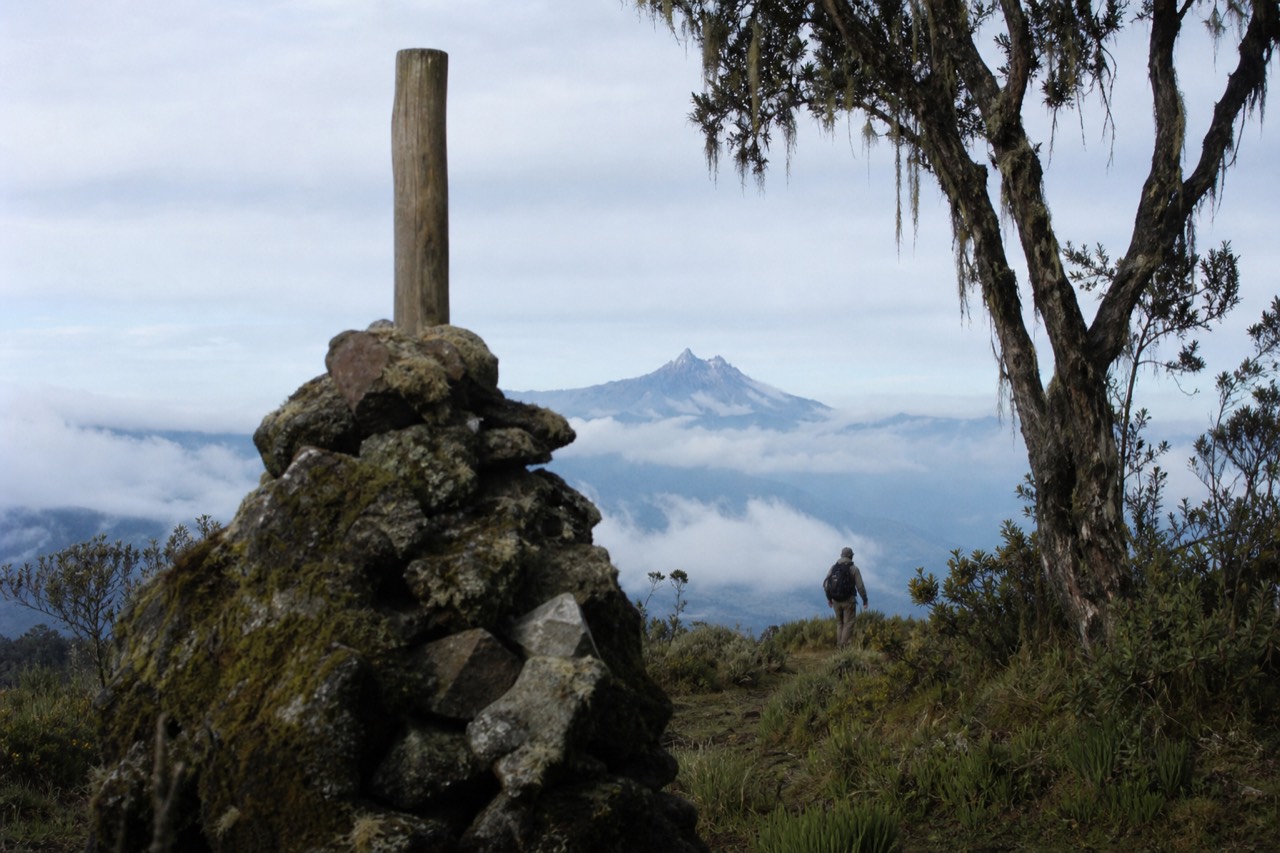
There is a saddle at about 3,000 metres between two volcanoes where the ground stays wet all year and hagenia trees drip onto moss. A research camp stood there for decades. What is left is a scatter of foundations, a line of small gorilla graves, and one human grave placed deliberately among them. That was not a burial accident. It was the argument of her life.
Who was Dian Fossey and why was she living on a volcano?
Dian Fossey founded the Karisoke Research Center on 24 September 1967, in the saddle between Mount Karisimbi and Mount Bisoke, taking the camp's name from both peaks. She had been recruited by the palaeoanthropologist Louis Leakey for long-term field study of mountain gorillas, and she stayed for eighteen years.
The work she is remembered for is not the work she is famous for. Her lasting contribution was technical: she learned gorilla behaviour well enough to habituate wild groups to human presence, so a family would carry on feeding and dozing while people sat nearby. Before that, gorillas were animals you glimpsed and lost.
Every trek leaving Kinigi depends on it. The ten families open to visitors are habituated groups, and habituation takes years of daily contact. Her biography at the fund she founded traces how the method developed.
What happened to Digit?
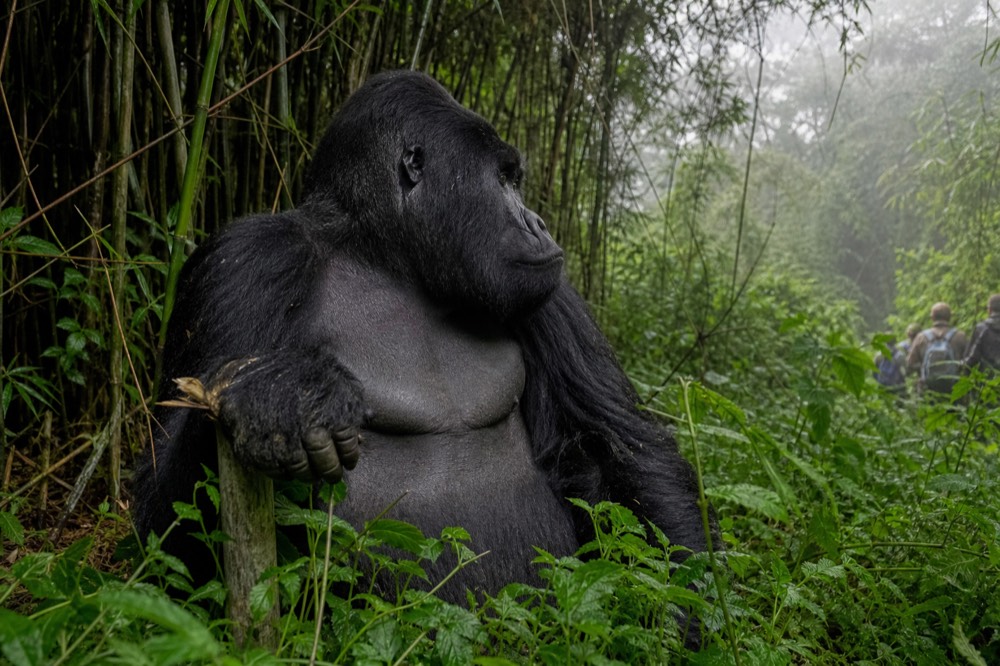
Digit was a young silverback in Fossey's Group 4, named for a bent finger, and the gorilla she was closest to. Poachers killed him on 31 December 1977 while he was defending his group. He suffered multiple spear wounds and was mutilated. Fossey responded by founding the Digit Fund, later renamed the Dian Fossey Gorilla Fund.
Digit's death reorganised her priorities. A scientist who had spent a decade recording behaviour turned campaigner, and the money raised in his name is the direct ancestor of the organisation still running research in the Virungas. That fund now works across a wild population of roughly 1,063, the only great ape known to be increasing. The arithmetic sits in our piece on how many mountain gorillas are left.
So what happened to Dian Fossey?
She was murdered at Karisoke in December 1985, eighteen years after founding the camp. The killing has never been resolved. She was buried at the research centre beside Digit and the other gorillas she had studied, at roughly 3,000 metres, and Karisoke's work continued afterwards under the fund she had created.
That is the established record, and it is the right place to stop. The case attracted decades of theorising about poachers, rivals and people in her own orbit, none of it ever settling into something a careful writer can state as fact. Naming suspects in an unproven killing is entertainment, not history.
What came next is beyond dispute. The research did not stop, and the dataset she began in 1967 is now among the longest continuous studies of any wild primate population anywhere.
| Date | What happened |
|---|---|
| 24 September 1967 | Karisoke Research Center founded in the saddle between Karisimbi and Bisoke |
| Late 1960s to 1970s | Fossey habituates wild gorilla groups, making close observation possible |
| 31 December 1977 | Digit, her favoured silverback from Group 4, is killed by poachers |
| After 1977 | The Digit Fund is founded in his name, later the Dian Fossey Gorilla Fund |
| December 1985 | Fossey is murdered at Karisoke; the case is never resolved |
| After 1985 | Karisoke continues under the Dian Fossey Gorilla Fund |
| February 2022 | The fund opens the Ellen DeGeneres Campus at Kinigi; Karisoke's work moves there |
Can you visit her grave?
Yes. The Dian Fossey memorial hike runs from Volcanoes National Park up to the old Karisoke site, roughly 6 kilometres round trip and four to six hours in total, climbing about 400 to 500 metres from a start around 2,500 metres. It normally requires a separate $75 permit and is graded moderate rather than hard.
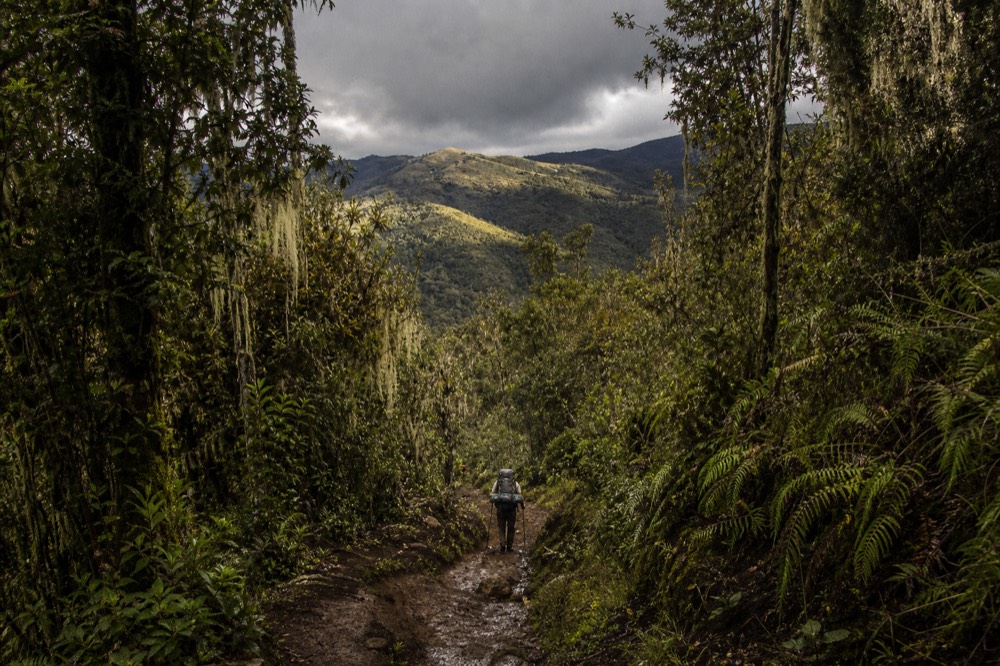
It is a very different walk. No animals to find, so nobody stands in nettles waiting for a radio call. What you get is montane forest, views back over terraced farmland, the camp ruins, and then the graves: Digit's, the others', and hers set among them.
The combined day from Kigali exists for people who want both, pairing a morning trek with either the memorial hike or the Gorilla Guardians village. For what the gorilla half demands, start with our honest read on how hard the climb is; the full picture of the park covers the rest.
Doing both properly is a two-day problem, though. A trek can run eight hours before you walk a step toward Karisoke, so travellers who refuse to compress it buy a multi-day package instead, with the $1,500 permit inside the price.
What her work turned into
In February 2022 the Dian Fossey Gorilla Fund opened the Ellen DeGeneres Campus at Kinigi, next to Volcanoes National Park: its first permanent purpose-built home in Rwanda, a roughly $15 million project of which more than $13.4 million went into the local economy through construction. Karisoke's activities moved there the same year.
Designed by MASS Design Group, it holds research space, education facilities, a public gallery and staff housing. Science that began in a cabin at 3,000 metres now runs from a valley building Rwandan students can reach. The fund's own account of the campus sets out how it works.
The gallery is open to visitors and turns up as an add-on rather than a headline. One trek from Kigali lets you choose between the gorillas and the golden monkeys sharing the same bamboo, with campus visits alongside, from $345 with the golden monkey permit included. The gorilla option still needs the $1,500 permit.
Here is the part that matters to anyone booking. The $1,500 permit is expensive, and it is also what converts a tourist's curiosity into ranger salaries, veterinary care and community revenue around the park, which is the model Fossey's fund was built to argue for. We take that apart in whether gorilla trekking is ethical. Otherwise, you can see which dates pair the trek with the memorial hike, check availability on the golden monkey option, or compare every bookable trek side by side first.
Common questions
What happened to Dian Fossey?
She was murdered at the Karisoke Research Center in December 1985, eighteen years after founding it, and the case has never been resolved. She was buried at the camp beside Digit and the other gorillas she studied, at around 3,000 metres. Her organisation, founded as the Digit Fund and now the Dian Fossey Gorilla Fund, still runs the work.
What were Dian Fossey's last words?
No last words are on record. She was killed at Karisoke in December 1985 with no witness account ever established, and the quotations circulated online as her final diary entry are not part of the documented record. What is established: the place, the date, her burial beside Digit at the camp, and that nobody has ever been credibly identified as her killer.
Did Jane Goodall know Dian Fossey?
They were connected through the same man. Louis Leakey recruited both women for long-term great ape field studies, Goodall for chimpanzees and Fossey for gorillas. Before starting her own work, Fossey visited Goodall's research station at Gombe in Tanzania to observe her field methods first hand, then applied that approach in the Virungas.
Who was Dian Fossey's favorite gorilla?
Digit, a young silverback in her study Group 4, named for a bent finger. Poachers killed him on 31 December 1977 while he defended his group, and his death prompted her to found the Digit Fund for anti-poaching work. She is buried beside him at the old Karisoke site, which is why the memorial hike passes both graves.
Can you visit Dian Fossey's grave in Rwanda?
Yes. The memorial hike climbs from Volcanoes National Park to the former Karisoke site, roughly 6 kilometres round trip over four to six hours, gaining 400 to 500 metres from a start near 2,500 metres. It needs its own $75 permit, separate from the $1,500 gorilla permit.