Is Gorilla Trekking Ethical?
Habituation, disease risk and 510 relocated households on one side. A population of 1,063 and rising on the other. The honest case, with the real numbers.
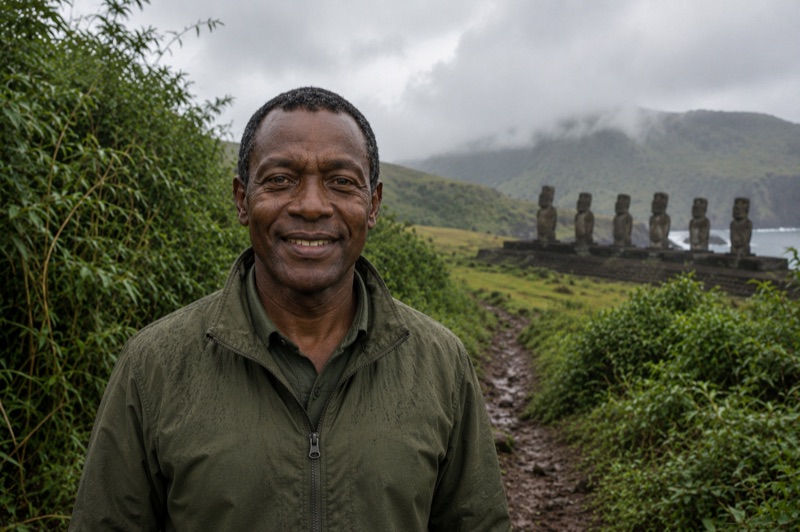 By Eric Habimana, gorilla trekking guide since 2015
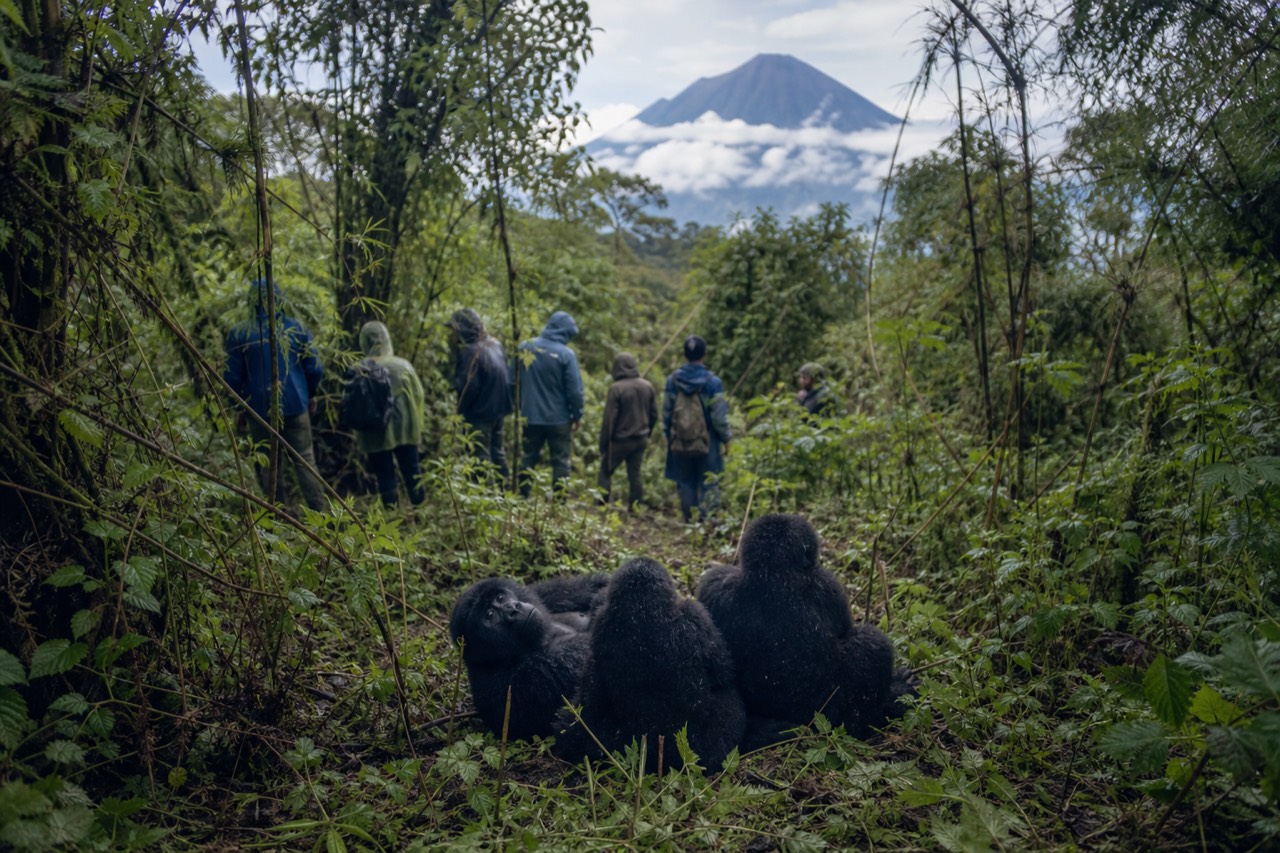
The uncomfortable part is not the money. It is the tolerance. A habituated gorilla family has been worked on for years until a line of strangers in its forest produces no reaction at all. That indifference is manufactured, and it is what $1,500 buys. Anyone booking a trek should look straight at it.
What does habituation actually cost the gorillas?
Habituation deliberately removes a wild animal's wariness of people. In Volcanoes National Park, ten fully habituated families are open to visitors, each receiving a maximum of eight people a day for one hour. Other groups in the park, including Pablo and Beetsme, are kept for research only and never see tourists.
That detail matters. Not every gorilla here has been turned into a visitable animal: the park runs a split estate, tourism on one side and research on the other. The costs on the tourism side are still real. Repeated close contact puts a permanent human presence inside a family's daily routine, and any page telling you the gorillas are unaffected is selling something.
Do the rules actually do anything?
The Rwanda Development Board publishes a strict rule set: keep seven metres back, one hour of viewing, eight visitors maximum, no flash photography, cover your coughs and turn away, keep your voice low, no rapid movements, no spitting, no litter. The heaviest rule is the one about you: do not trek with a cold, flu or any contagious illness.
Gorillas share enough of our physiology that a human respiratory infection threatens a whole family. The seven-metre line exists for that, not for your safety.
| Published rule | What it is protecting against |
|---|---|
| 7 metre distance | Disease transmission from humans to gorillas |
| One hour per group, per day | Cumulative disturbance to feeding and rest |
| Maximum 8 visitors | Crowd pressure on a single family |
| No flash photography | Startle response in animals with no escape option |
| No trekking while sick | The single largest outbreak risk in the park |
| Cover coughs, turn away, no spitting | Aerosol and surface transmission |
Enforcement varies with the guide and the group. The rule you personally control is the sickness one, and it is where a traveller can do genuine harm. Turning up with a head cold to protect a $1,500 purchase is the least defensible thing anyone does on this mountain. If your guide hands you a mask, wear it. The rules sit on the official booking page, not just in an operator's summary of them.
Does the money genuinely reach conservation?
Rwanda sells 80 permits a day at $1,500, which is $120,000 daily if every one clears. Ten percent of national park tourism revenue goes to a revenue sharing programme for communities beside the parks, raised from 5 percent in 2017 when the permit price went up. The rest funds the rangers, trackers and veterinary teams working the habituated families.
The scale of that machine is easiest to see in the sponsorships it pays for, covered in why Visit Rwanda is on Arsenal and Clippers jerseys.
The outcome argument is the strongest card here. Mountain gorillas are the only wild great ape whose numbers are known to be rising, from roughly 1,063 animals across the Virungas and Bwindi. The great apes in decline are, broadly, the ones nobody pays $1,500 to see.
| The case against | The case for |
|---|---|
| Habituation permanently changes wild families | Ten families visited, others reserved for research only |
| Human disease is a real outbreak risk | Rules and daily monitoring exist precisely for it |
| 510 households relocated for the park expansion | 10 percent revenue share plus $50 million in community financing |
| The whole system depends on tourist money | The population is rising, alone among great apes |
The IUCN Red List still classes mountain gorillas as Endangered, and the Green Status assessment calls recovery across eastern gorillas uneven. Rising is not safe. Our piece on where the population stands has the census figures.
What about the people moved off the land?
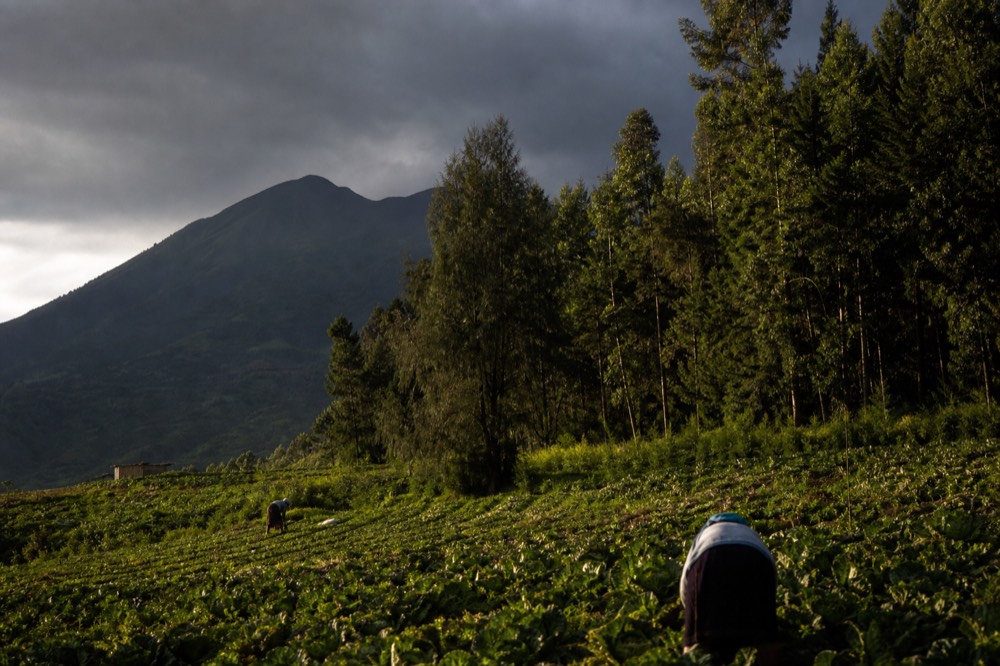
The park expansion carries a human cost that rarely makes travel pages. A pilot phase targets 732.5 hectares, with about 426 already acquired, and it physically relocates 510 households into a 50-hectare model green village roughly two kilometres from the site, with livelihood support reaching around 992 households in total.
The long-term plan adds about 3,740 hectares to a 16,000-hectare park, roughly a 23 percent increase, plus some 6,620 hectares of supporting zones, backed by a $50 million credit agreed in 2023.
Compensated relocation is not eviction, and it is also not nothing. An honest account has to hold both facts at once: the forest is growing, and people were moved so it could.
Is gorilla trekking ethical in Rwanda?
Is gorilla trekking ethical in Rwanda? On the evidence, defensibly yes, with conditions. The permit system funds the protection behind the only wild great ape population known to be growing, and the park keeps research groups off the tourist circuit. The costs are habituation, disease risk and 510 relocated households, and none of them vanish because the outcome is good.
What tips it is the counterfactual. Remove the permit revenue and you remove the rangers, the monitoring and the political case for enlarging a park in a densely farmed district. The alternative to managed tourism here has never been untouched forest. It has been farmland. That defends the system, not every trekker inside it.
What does a responsible trekker actually do?
Cancel if you are sick, even at the cost of the permit. Keep the seven metres your guide sets, turn the flash off before you leave the vehicle, hire a porter, keep your voice down, and stop chasing the photograph when the hour is called. Follow ranger instruction without negotiating it.
Hiring a porter is the least discussed of those and one of the most useful: it puts money straight into the hands of someone from a park-edge community.
If the $1,500 troubles you rather than the ethics, the park sells a $100 golden monkey permit for an endangered primate almost nobody books, covered in our golden monkey guide. Otherwise you can see the current departure dates for the lowest ground-cost day trip, or check availability on the version adding the Dian Fossey memorial. The park guide covers the rest, and you can compare every bookable trek in one place.
Frequently asked questions
Is gorilla trekking ethical in Rwanda?
Defensibly yes, with conditions. Permit revenue funds the ranger and monitoring system behind the only wild great ape population known to be increasing, and research groups stay off the tourist circuit. The costs are genuine: habituation changes wild families permanently, human illness is an outbreak risk, and 510 households were relocated for the park expansion.
Does gorilla trekking harm the gorillas?
It affects them. Habituation removes wariness of people for good, and daily visits add human presence to a family's routine. The rules limit the damage: seven metres, one hour, eight visitors, no flash, no trekking while sick. Groups such as Pablo and Beetsme are kept for research and receive no tourist visits at all.
Where does the $1,500 permit fee go?
Into park protection and community programmes. Rwanda channels 10 percent of national park tourism revenue to a revenue sharing scheme for communities next to the parks, doubled from 5 percent in 2017 when the permit price rose. The remainder funds rangers, trackers and the veterinary work behind every habituated family.
Should you cancel a gorilla trek if you have a cold?
Yes. The Rwanda Development Board states plainly that you should not trek with a cold, flu or any contagious illness, and you may be denied access at the briefing. Human respiratory infection is one of the largest threats to a habituated family. Losing the permit is the cost of not risking an outbreak.