How Many Mountain Gorillas Are Left in 2026?
About 1,063 mountain gorillas remain in the wild: roughly 604 in the Virunga massif and 459 in Bwindi. The one great ape whose numbers are climbing, and why.
 By Eric Habimana, gorilla trekking guide since 2015
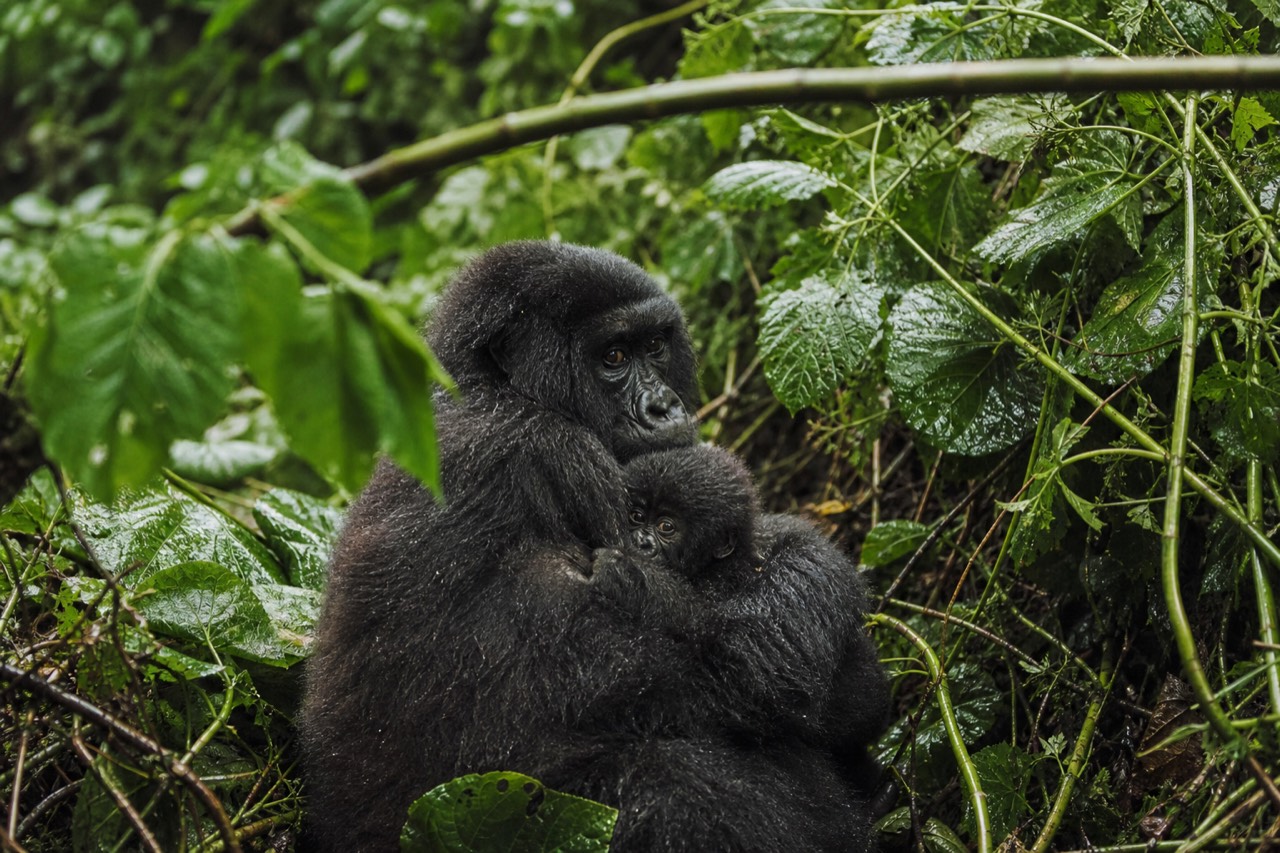
There is a number that gets quoted at almost every Kinigi briefing, and it is small enough to sit in one sentence. Every mountain gorilla on record lives in one of two places: the Virunga volcanoes shared by Rwanda, Uganda and the Democratic Republic of Congo, or the Bwindi Impenetrable Forest just north of them. Two forest blocks, three countries, one total that would fit inside a mid-sized concert hall.
How many mountain gorillas are left in 2026?
How many mountain gorillas are left in 2026? Roughly 1,063 in the wild. About 604 live in the Virunga massif and about 459 in Bwindi Impenetrable Forest, with some estimates for Bwindi running to around 500. Those figures come from the Virunga censuses and the 2018 Bwindi-Sarambwe census, and 2025 and 2026 sources still cite them as the most recent published totals.
That is the whole global population, counted rather than modelled.
| Population | Latest published estimate | Census basis |
|---|---|---|
| Virunga massif, Rwanda, Uganda and DRC | about 604 | Virunga censuses, 2015 to 2016 and 2018 estimates |
| Bwindi Impenetrable Forest, Uganda and DRC | about 459, some estimates to about 500 | 2018 Bwindi-Sarambwe census |
| Total in the wild | about 1,063 | The two counts combined |
A newer Bwindi survey has been under way, with results still pending through 2026. Until it publishes, 1,063 is the number that stands.
Is the population actually growing?
Yes. Mountain gorillas are the only wild great ape known to be increasing in number. Every other great ape taxon on earth is in decline. The count has climbed steadily since the low points of the 1970s and 1980s, and births recorded in the Virunga groups during 2026 point to continued modest growth on top of the published totals.
Rwanda's naming ceremony gives that trend a public face. The 20th Kwita Izina named 40 infants at Kinigi on 5 September 2025, and the 21st, set for 4 September 2026, has 22 announced.
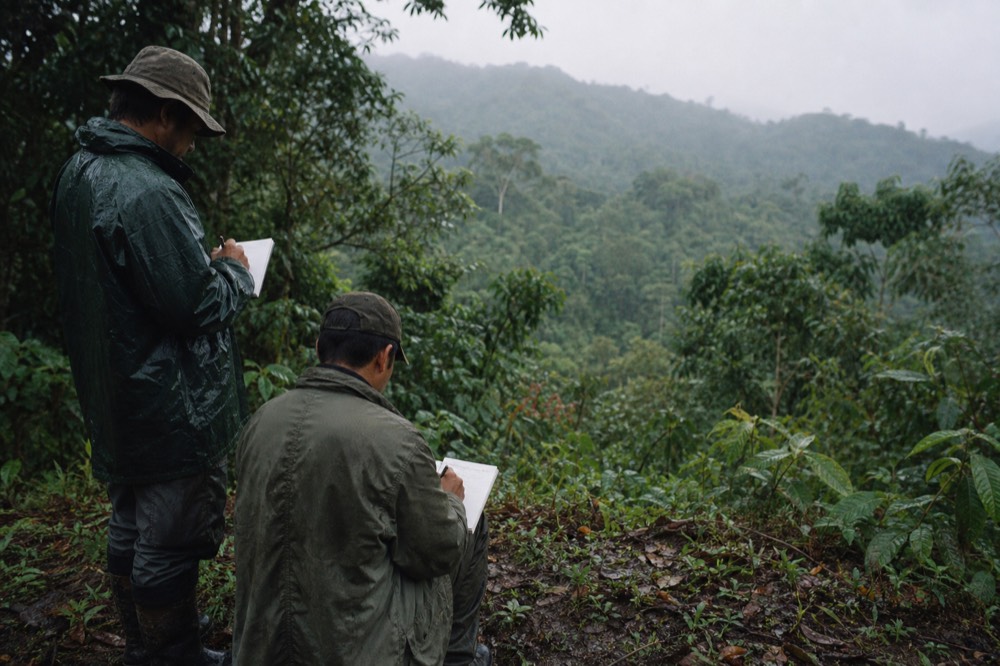
Growth is not evenly spread. The IUCN Green Status assessment describes recovery across eastern gorillas as uneven, so one taxon climbing does not lift the wider picture.
Why are mountain gorillas endangered?
Why are mountain gorillas endangered? Because a population of about 1,063 animals confined to two forest blocks has no margin. The IUCN Red List still classes them as Endangered despite the growth: habitat is bounded by farmland on every side, poaching took animals out of these same families within living memory, and human respiratory illness passes to them readily.
Habitat is the hard limit. In Rwanda the terraces come right to the park wall, and Volcanoes National Park covers roughly 16,000 hectares. Forest cannot expand into cropland on its own, which is why the state is buying land.
Disease is the other permanent risk, and it is why the trekking rules read the way they do. Seven metres of distance, one hour of viewing, eight visitors maximum, no flash, no trekking with a cold or flu. Those are not etiquette. Poaching is the older threat: the silverback Digit was speared on 31 December 1977, and his death prompted the fund that became the Dian Fossey Gorilla Fund. The Red List entry still reads Endangered.
What does the permit money actually buy?
Rwanda charges $1,500 per person and sells 80 permits a day across ten habituated families. Ten percent of national park tourism revenue goes to a revenue sharing programme for communities beside the parks, a share raised from 5 percent in 2017 when the permit price rose. The rest funds the ranger, tracker and veterinary operation that visits every habituated group daily.
Run the arithmetic on the cap. Eighty permits at $1,500 is $120,000 a day if every one sells: a tiny fixed supply priced at what people will pay. That is the argument, not an accident, and we work it through in why the trek costs what it does. If you would rather the permit sat inside one number, see what the all-in day costs, or compare every bookable trek first.
| Mechanism | Figure |
|---|---|
| Gorilla permit, foreign non-resident | $1,500 |
| Permits available per day | 80, ten habituated families of eight |
| Share of park tourism revenue to nearby communities | 10 percent, raised from 5 percent in 2017 |
| Community resilience financing behind the park expansion | $50 million IDA credit, 2023 agreement |
| Habitat targeted by the long-term expansion plan | about 3,740 hectares, roughly 23 percent more park |
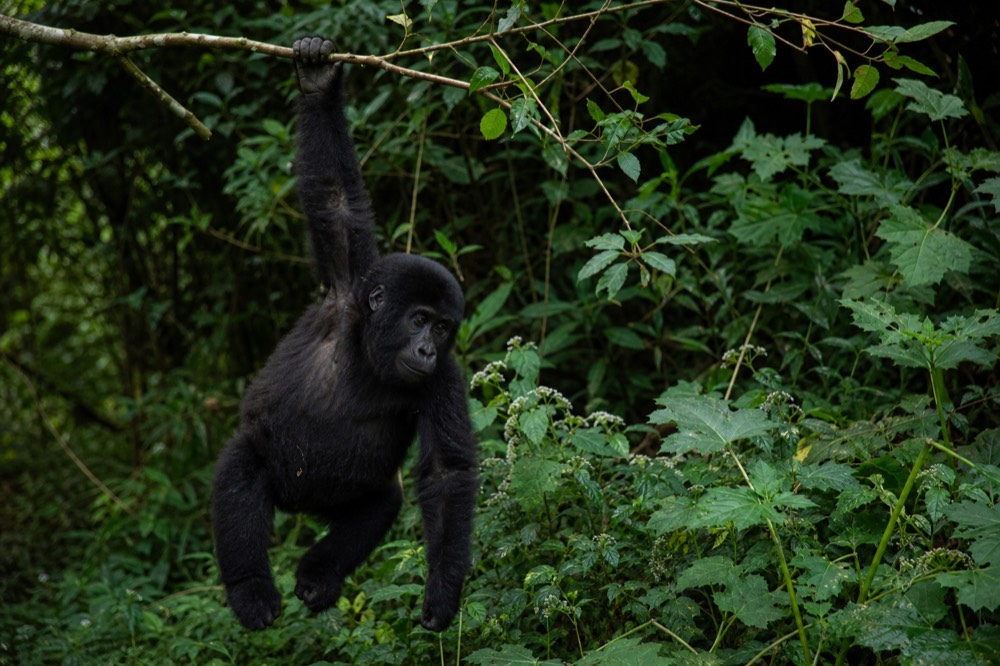
The land purchase is the part almost nobody mentions. A pilot phase targets 732.5 hectares, about 426 of them already acquired, and it relocates 510 households into a 50-hectare model green village roughly two kilometres away. More forest for the gorillas means fewer fields for people, and Rwanda has chosen to pay for that rather than pretend it is costless.
What would put the number back into decline?
A disease outbreak in a habituated family is the fastest way to lose ground, which is why the sickness rule is enforced rather than suggested. Beyond that, the risks are poaching, instability along the DRC border where the strictest travel advisories still apply, and any weakening of the tourism revenue that pays for the whole protection system.
The third is worth sitting with. Protection here is funded by visitors buying an hour, and the population curve and the permit price have climbed together. We take that dependency seriously in whether the trek can be defended ethically.
To see where the counting began, the Dian Fossey memorial hike climbs to the old Karisoke site at around 3,000 metres, where Fossey is buried beside Digit. Day treks offer it as an add-on, and you can check dates and the live price for the combined version. Our account of what happened to Dian Fossey fills in that story; the park guide covers the rest of the boundary.
Frequently asked questions
How many mountain gorillas are left in 2026?
About 1,063 in the wild. Roughly 604 live in the Virunga massif spanning Rwanda, Uganda and the DRC, and about 459 in Bwindi Impenetrable Forest, with some Bwindi estimates running to around 500. These come from the Virunga censuses and the 2018 Bwindi-Sarambwe census, and remain the most recent published totals.
Why are mountain gorillas endangered?
A total wild population of about 1,063 animals, restricted to two forest blocks ringed by farmland, leaves no margin for error. Poaching killed gorillas in these families within living memory, the silverback Digit among them in 1977. Human respiratory illness passes to them, which is why the park turns away anyone trekking with a cold or flu. The IUCN Red List keeps them classed as Endangered.
How many mountain gorillas live in Rwanda?
Rwanda holds part of the Virunga massif population of about 604 animals, shared with Uganda and the DRC, because families range across borders that mean nothing to them. Volcanoes National Park has ten fully habituated families open to visitors, each taking eight people a day for one hour.
Are mountain gorilla numbers still increasing?
Yes. They remain the only wild great ape taxon known to be increasing, and births recorded in Virunga groups through 2026 suggest continued modest growth. The IUCN Green Status assessment describes recovery across eastern gorillas as uneven, so the mountain gorilla trend is the exception rather than a general improvement.
Where can you actually see mountain gorillas?
Only in the Virunga volcanoes, shared by Rwanda, Uganda and the DRC, and in Bwindi Impenetrable Forest. Rwanda's Volcanoes National Park is the most accessible option, about 90 minutes by road from Kigali, with a $1,500 permit and 80 places a day.