Golden Monkey Trekking in Rwanda: The Virungas' Other Primate
One permit costs $1,500 and sells out months ahead. The other costs $100, and almost nobody plans for it.
 By Eric Habimana, gorilla trekking guide since 2015
Short answer
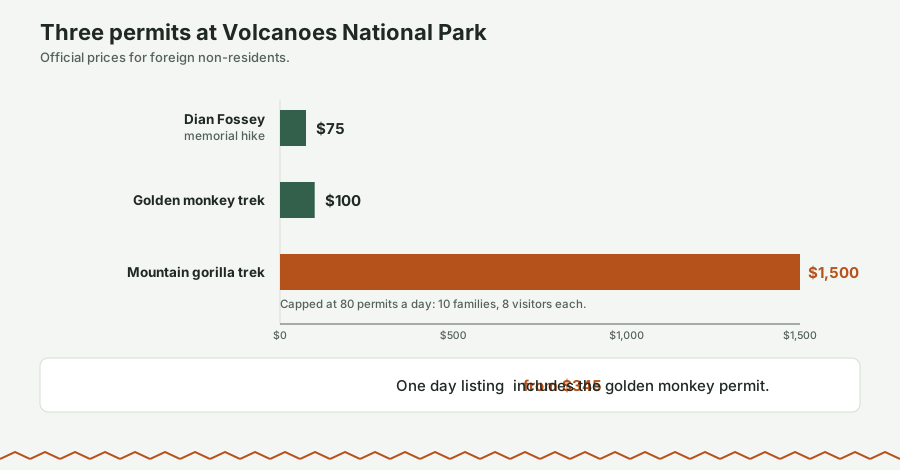
A golden monkey permit at Volcanoes National Park costs $100 for foreign non-residents, against $1,500 for a gorilla permit. The animal is Cercopithecus mitis kandti, an endangered Virunga primate with an estimated 4,626 individuals in the park, and it lives in the bamboo belt. One day listing runs from $345 with the golden monkey permit already included.
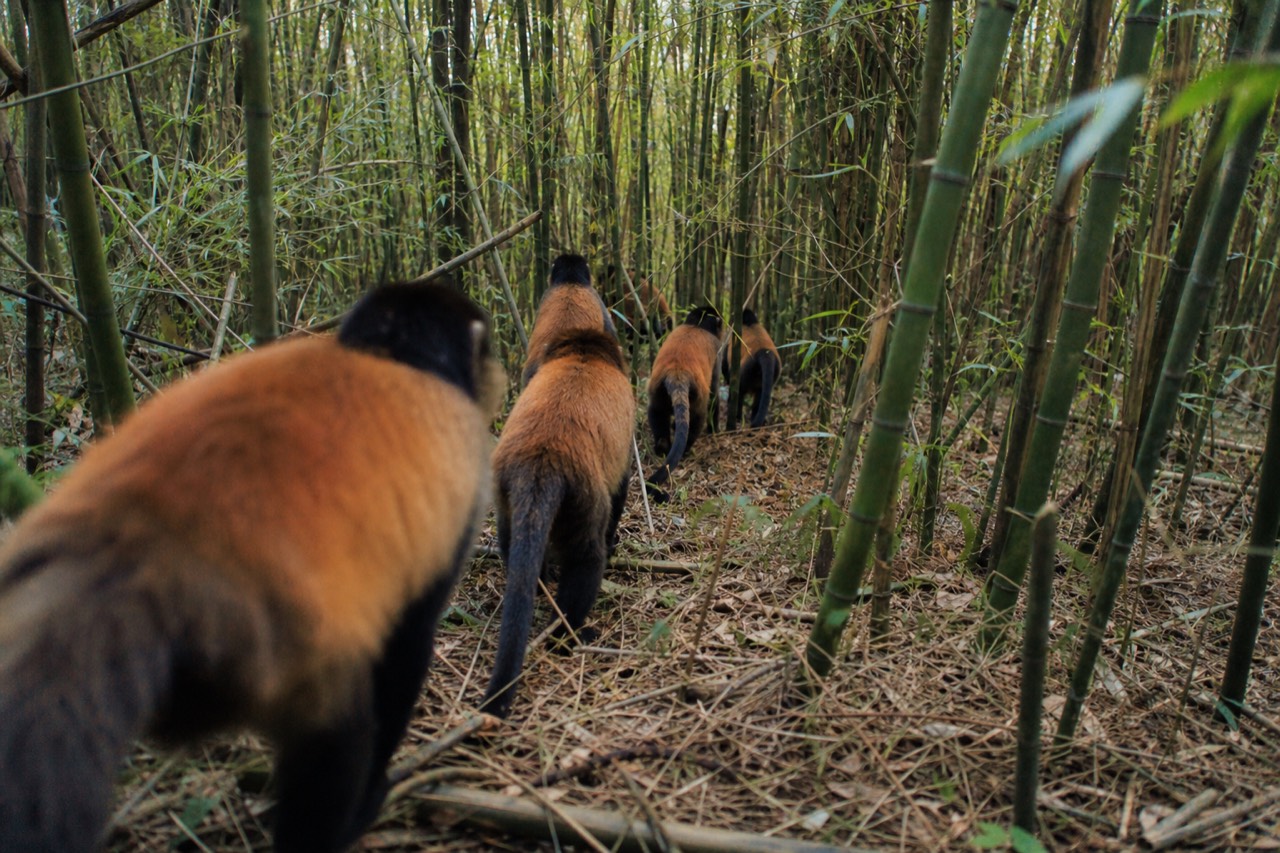
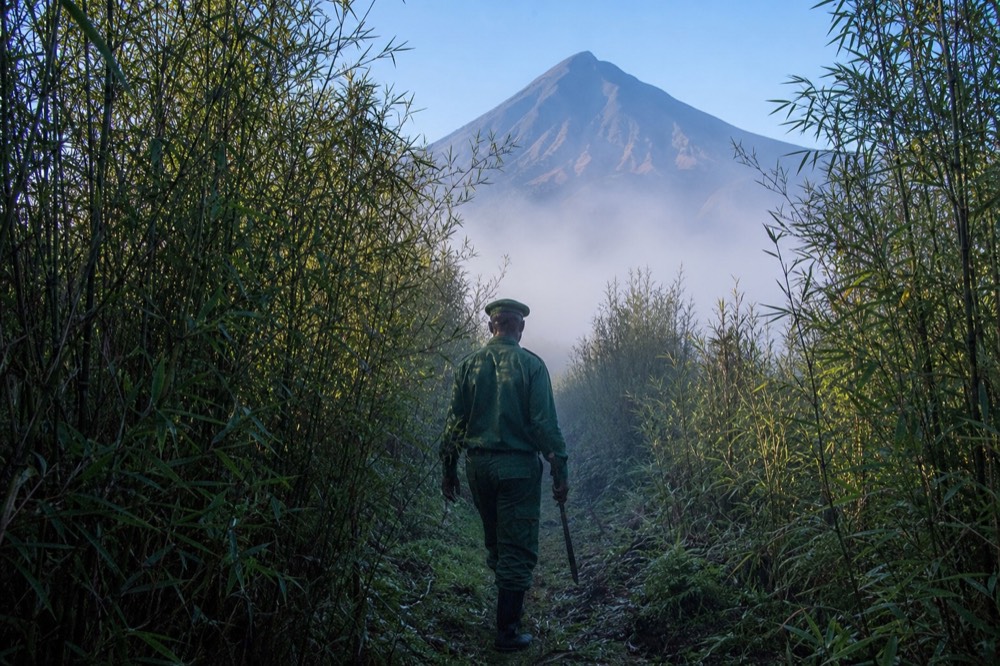
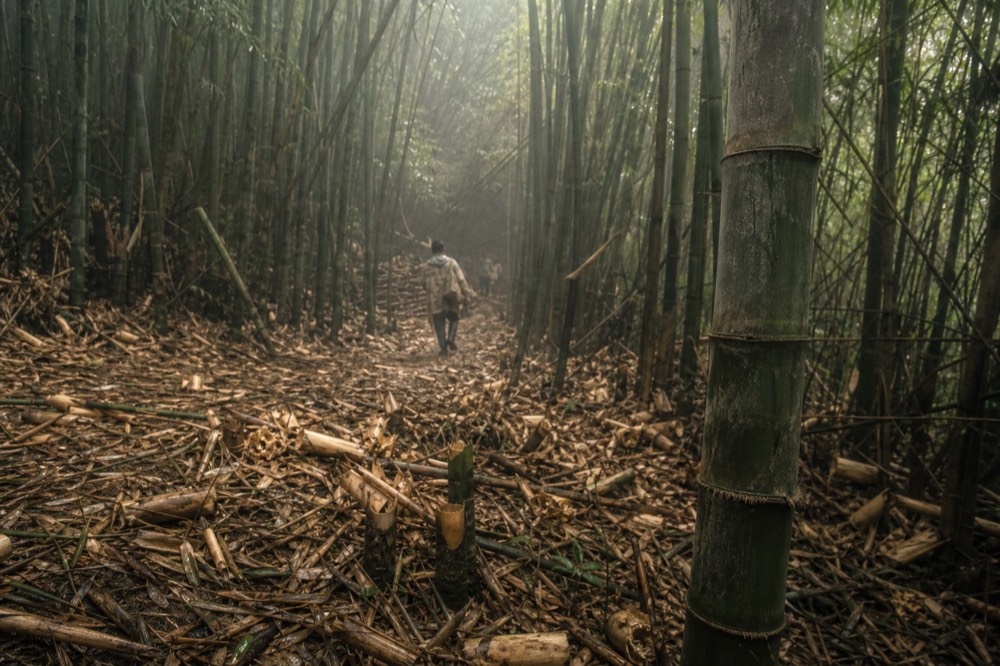
They arrive before you hear them. Bamboo does not carry sound the way hardwood forest does, so the first sign is usually a stem bending under weight, then a second, then the whole stand shivering as thirty animals move through it at once. Golden monkeys do not sit still for anyone. A gorilla hour is a slow, heavy, deliberate thing. A golden monkey hour is bright orange fur crossing the gaps between stems faster than you can focus a lens.
They also cost one fifteenth of what a gorilla costs, which is the fact that reorganises most Rwanda itineraries once people find it.
What does a golden monkey permit cost in Rwanda?
A golden monkey tracking permit at Volcanoes National Park costs $100 for foreign non-resident adults. Foreign residents in Rwanda and East African citizens pay $65 adult and $45 for students and children. Rwandan citizens pay RWF 4,000 adult and RWF 2,000 student or child. The Rwanda Development Board sells them through the same portal as gorilla permits.
The gap to the gorilla permit is the whole story. Both are sold by the same authority, in the same park, briefed from the same headquarters on the same morning. One costs $1,500 and is capped at 80 per day. The other costs $100.
| Visitor category | Golden monkey permit | Gorilla permit, standard foreign rate |
|---|---|---|
| Foreign non-resident, adult | $100 | $1,500 |
| Foreign resident in Rwanda, adult | $65 | Promotional resident rates apply |
| East African citizen, adult | $65 | Promotional resident rates apply |
| Student or child, resident categories | $45 | Minimum age 15 applies to gorilla tracking |
| Rwandan citizen, adult | RWF 4,000 | Promotional citizen rates apply |
| Rwandan citizen, student or child | RWF 2,000 | Minimum age 15 applies to gorilla tracking |
Rates are published openly on the Rwanda Development Board golden monkey page. Read them there before you budget, because resident and citizen categories carry conditions and the gorilla side of the table has run promotional pricing with blackout months. Our permits guide works through the booking mechanics for both.
What is a golden monkey?
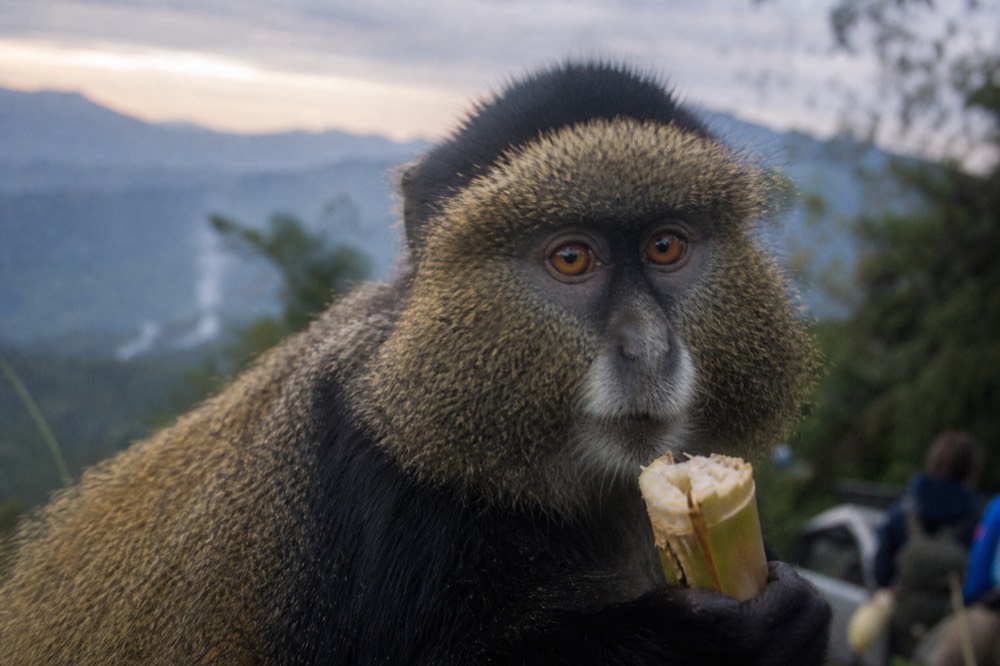
Golden monkeys are Cercopithecus mitis kandti, a primate of the Virunga volcanoes classed as Endangered. They are bamboo specialists, feeding heavily on shoots and leaves in the bamboo belt of the mountains, and they live in large, loud, fast-moving troops rather than the small, quiet family units that gorilla trekking prepares you for.
The colouring is the thing people remember. The flanks and back carry a deep orange-gold that catches even in flat cloud light, set against a darker crown and limbs. In bamboo, that combination reads as a flash of copper moving sideways.
Bamboo dependence is also the species' vulnerability. A primate tied to one plant community in one mountain range has nowhere to go when that community shrinks, which is exactly what the regional conservation planning addresses. The Virunga range crosses Rwanda, Uganda and the Democratic Republic of Congo, and the subspecies has a dedicated Regional Golden Monkey Conservation Action Plan running from 2023 to 2028, aimed at habitat loss and the other pressures on the population.
How rare is the golden monkey?
How rare is the golden monkey? Roughly 4,626 individuals were estimated in Volcanoes National Park in the 2017 to 2018 survey, with a confidence interval of 4,165 to 5,088. That is up from about 4,331 in 2007 and 4,487 in 2011, and the subpopulation is described as stable. The subspecies is still classed as Endangered.
Put next to the gorillas, the arithmetic is odd. There are roughly four and a half times more golden monkeys in this one park than there are mountain gorillas on the entire planet, and the golden monkey is the one hardly anyone has heard of. Rarity and fame are not the same axis.
| Survey | Estimated golden monkeys in the park | Note |
|---|---|---|
| 2007 | about 4,331 | Earliest of the three counts on record |
| 2011 | about 4,487 | Modest increase |
| 2017 to 2018 | about 4,626 | Confidence interval 4,165 to 5,088 |
| Trend | stable | Conservation status remains Endangered |
"Stable" is doing quiet work in that table. For a bamboo-dependent primate confined to one volcano chain shared by three countries, flat is a good outcome, and it is the reason the 2023 to 2028 action plan exists rather than a recovery plan. The population is holding, not recovering.
How does the golden monkey trek differ from the gorilla trek?
The two treks share a park, a headquarters and a morning, and diverge on almost everything else. Gorilla tracking is capped at 80 permits a day across ten habituated families of eight visitors each, at $1,500 per person, with a published rule set covering distance, viewing time and photography. Golden monkey tracking costs $100 and is not subject to that daily cap.
The published gorilla rules are worth knowing even if you only book monkeys, because they set the tone for how the park runs everything. Keep seven metres back. One hour of viewing. Maximum eight visitors to a family. No flash photography. Do not trek if you have a cold, flu or any contagious illness, and expect to be turned away if you do. Cover coughs, turn away from the animals, keep your voice down, no sudden movements, no litter. Those lines come straight off the official booking page.
| Golden monkey trek | Mountain gorilla trek | |
|---|---|---|
| Official permit, foreign non-resident | $100 | $1,500 |
| Daily permit cap | no comparable published cap | 80, ten families of eight |
| Habitat you walk into | the bamboo belt | forest across the trekking band |
| What you watch | large fast-moving troops | one family, one hour |
| Photography | movement is the challenge | no flash, seven metre distance |
| Advance booking pressure | low | high in dry season |
| Bundled into a tour price | yes, on one listing at $345 | rarely, and it lifts the price above $3,000 |
The photography difference catches people out. A gorilla sits. A golden monkey does not, and the light under bamboo is flat and green. Travellers who arrive with a long lens and a slow shutter mindset come away with a lot of blurred copper. Faster shutter, higher ISO, shorter lens.
What does the $345 listing actually include?
One day listing runs from $345 and includes the golden monkey trek permit in that price, along with private transport from Kigali and lunch. The same booking offers a gorilla option instead, and on that side the $1,500 permit is excluded and bought separately, with the operator assisting on the application. Optional add-ons cover the Dian Fossey campus and a village visit.
Among the day options running out of Kigali, this is the only one where a park permit sits inside the headline number at a price a normal person recognises. On the gorilla side, permit-inclusive listings start at $3,350 for a single day, because they are carrying a $1,500 ticket inside them.
| If you choose | Permit position | What you are paying at the door |
|---|---|---|
| Golden monkey option, from $345 | golden monkey permit included | nothing further for the permit |
| Gorilla option, from $345 | gorilla permit excluded | $1,500 bought separately, with help |
| One-day all-in gorilla product | gorilla permit included | from $3,350, non-refundable |
| Lowest-cost gorilla day trip | gorilla permit excluded | from $260 plus the $1,500 permit |
It is a new listing, so no star rating is displayed yet, and free cancellation runs to 24 hours. If the golden monkey day is what you want, you can check dates and the live price and see which option is loaded on your date.
Can you trek gorillas one day and golden monkeys the next?
Yes, and it is the strongest use of a golden monkey permit. A two-day plan puts the $1,500 gorilla trek on day one, when your legs are fresh and the permit is non-negotiable, and the $100 golden monkey trek on day two. The second day adds roughly the cost of a decent dinner to a trip that already cost four figures.
The logic is about risk rather than value. Gorilla permits are fixed to a date and a family. If weather or a long tracking day eats your first morning, there is no second attempt, and you have spent $1,500 on an hour you barely remember. A second day in the park at $100 gives the trip a spare wheel.
| Two-day plan | Permit | Ground cost | Running total |
|---|---|---|---|
| Day 1, gorilla trek from Kigali | $1,500 | from $260 | from $1,760 |
| Night in Musanze | none | your accommodation | plus lodging |
| Day 2, golden monkey trek | $100 | from $345, permit inside | from $2,205 plus lodging |
That total is the honest floor, not a package price, and it assumes you buy the gorilla permit yourself through the government portal. Our full cost breakdown shows where the numbers move, and the packages guide covers what happens when you hand the whole thing to one operator instead.
What does the morning look like?
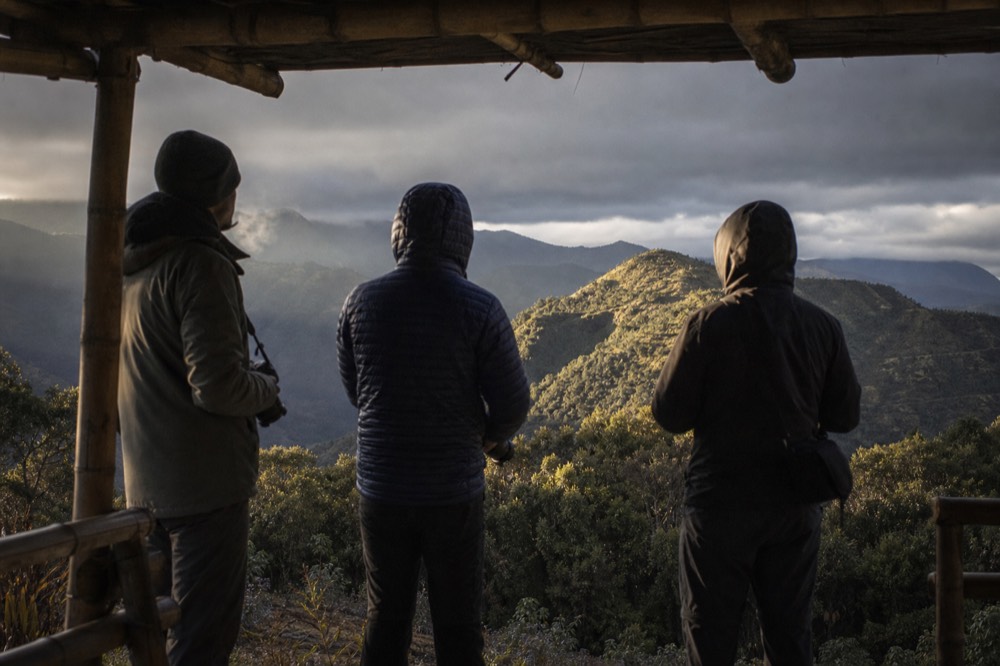
Park activities report to the Rwanda Development Board offices at Kinigi, where the gorilla briefing is set for 07:00. Groups are assigned, porters can be hired, and vehicles run out to the trailhead. Golden monkey troops range in and around the bamboo, so the walk in is generally shorter than a gorilla tracking day, though nothing in this park is guaranteed short.
Kinigi is a few kilometres above Musanze and about 90 minutes plus a short climb from Kigali. Day-trippers therefore leave Kigali in the dark either way, which is the single best argument for sleeping in Musanze if you are doing two days in the park.
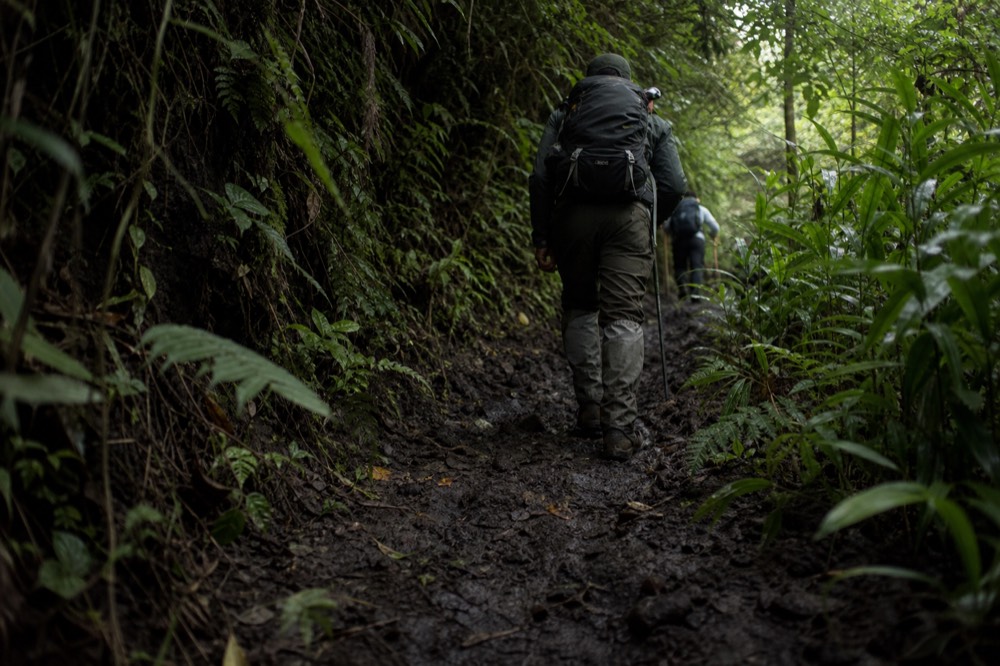
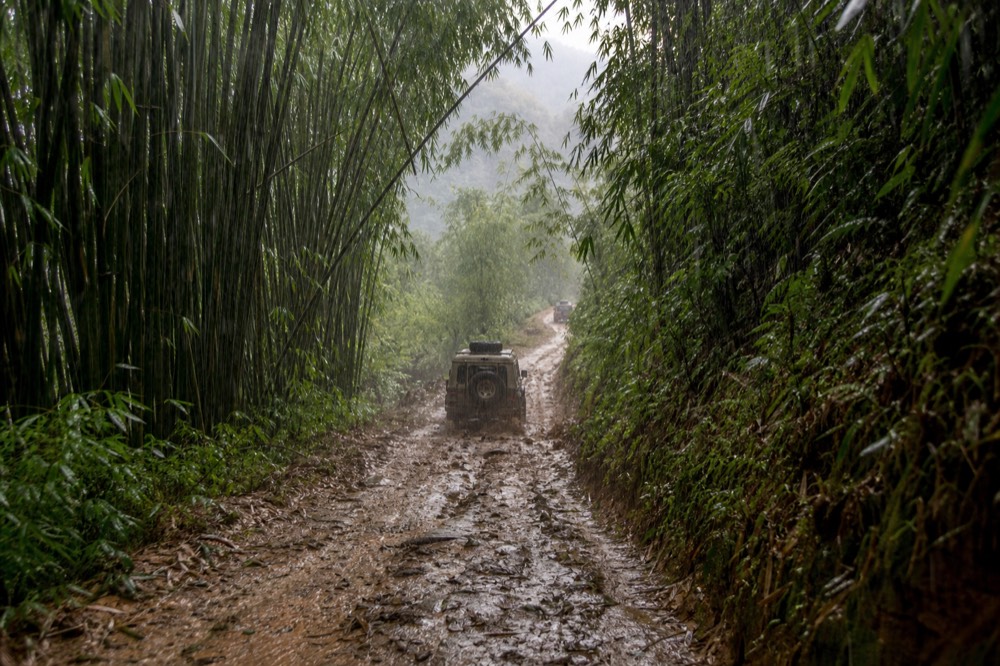
Gear is the same as for gorillas, because the mud is the same. Waterproof boots with ankle support, gaiters, gardening gloves for grabbing at stems, and a rain shell you actually believe in. The packing list that survives the mud applies here without amendment, and the month-by-month conditions matter to the walk-in more than to the animals.
What do you actually watch for an hour?
You watch a troop feed and move. Golden monkeys work the bamboo for shoots and leaves, and they do it in numbers, spread across a stand rather than gathered in one spot. There is no single dominant animal holding the frame the way a silverback does. The scene is wide, busy and constantly rearranging itself.
That difference in shape changes how the hour feels. Gorilla viewing pulls everyone's attention to the same three metres of forest. Golden monkey viewing scatters it. Your guide will point out one animal, and by the time you have found it, two more have crossed behind you and the group has drifted ten metres uphill.
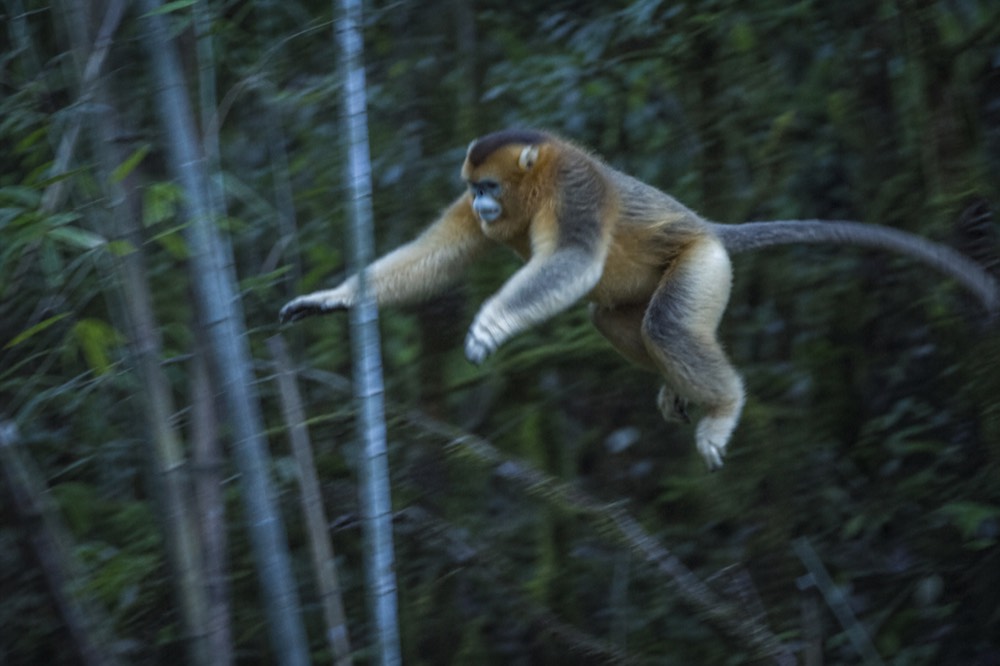
Two practical consequences. Stand still and let them come past rather than chasing the animal your guide indicated, because in bamboo the troop will move through you if you stop moving. And accept that you will not photograph everything. People who came for one clean portrait leave frustrated. People who came to watch a bamboo stand come alive leave grinning.
The park's own briefing culture helps here. Rangers run golden monkey mornings out of the same headquarters, with the same insistence on quiet voices and unhurried movement that the gorilla rules codify. If you want the trek that folds this into a day with transport and lunch, you can see what is available on your dates.
Does the season change the golden monkey trek?
Rwanda's dry seasons run June to September and December to February, and those are the months when the whole park is busiest. Golden monkey permits are not squeezed by the 80-per-day gorilla cap, so season affects your walk-in and your photographs far more than it affects your chances of getting a ticket.
Wet months are not off limits. Volcanic soil holds water and the trails are muddy in every season, so the honest difference is one of degree rather than kind. What changes is light. Under bamboo in heavy cloud you are shooting in a green half-dark, and a fast-moving orange animal in that light is a genuine challenge.
| Period | What it is | Underfoot | Permit pressure across the park |
|---|---|---|---|
| June to September | Dry season | Firmer, still muddy in patches | Highest of the year |
| December to February | Dry season | Firmer, short and busy | High |
| March to May | Outside the dry seasons | Heavier mud, longer walk-in | Lower |
| October to November | Outside the dry seasons | Heavier mud, greener bamboo | Lower |
If you are building a two-day plan, the gorilla permit is what fixes your dates, not the golden monkeys. Lock that first, then slot the $100 morning around it. Travellers watching the calendar can check which departures are still open for the gorilla half before committing to lodging in Musanze.
Where does the $100 go?
Rwanda channels 10 percent of national park tourism revenue into a revenue sharing programme for communities living next to the parks, a share raised from 5 percent in 2017 when the gorilla permit rose to $1,500. Permit money also underwrites the ranger and tracking operation that keeps every habituated group monitored daily.
The habitat argument is the one that connects directly to golden monkeys. Bamboo does not grow back under a potato terrace, and the park's boundary is farmland on every side. The expansion project now under way targets 732.5 hectares in its pilot phase, with a longer plan adding roughly 3,740 hectares against a 16,000-hectare base, and it relocates 510 households into a 50-hectare model green village to do it.
Naming the human cost is part of an honest answer, and the ethics question deserves the space we give it rather than a reassuring sentence. The official tourism board page sets out the revenue sharing policy in the state's own words.
Who should book this, and who should skip it?
Book the golden monkey trek if you are already in Musanze for gorillas, if the $1,500 permit has pushed your trip to its limit, or if you want a second morning in the park without a second four-figure ticket. Skip it if you have exactly one day in Rwanda and the gorillas are the only reason you came.
There is a version of this trip that goes wrong, and it is the traveller who substitutes rather than adds. Golden monkeys are wonderful and they are not gorillas. Nobody flies to Kigali for a bamboo primate and goes home satisfied that they saved $1,400. The traveller who books both walks out having seen the two primates the park was drawn around, for about 7 percent more than the gorilla permit alone.
| Your situation | The call |
|---|---|
| Two days in Musanze, gorillas already booked | Add it. $100 buys the second morning |
| Budget capped, gorilla permit out of reach | Worth the trip in its own right, at $100 |
| One day in Rwanda, gorillas non-negotiable | Skip it, book the gorilla day |
| Travelling with someone who cannot do a long climb | Ask at the Kinigi briefing about the shorter allocation |
| Photographers | Bring the faster shutter, not the longer lens |
For the wider picture of what else the park sells and where the golden monkey day fits, our Volcanoes National Park guide covers every activity and its permit. Or compare the full trek lineup if you already know which morning you want.
Frequently asked questions
How much is a golden monkey permit in Rwanda?
$100 for foreign non-resident adults at Volcanoes National Park, sold by the Rwanda Development Board. Foreign residents in Rwanda and East African citizens pay $65 for adults and $45 for students and children. Rwandan citizens pay RWF 4,000 for adults and RWF 2,000 for students and children. A gorilla permit, by contrast, is $1,500.
How rare is the golden monkey?
The 2017 to 2018 survey estimated about 4,626 golden monkeys in Volcanoes National Park, with a confidence interval of 4,165 to 5,088. That compares with roughly 4,331 in 2007 and 4,487 in 2011, so the subpopulation is described as stable. The subspecies is still classed as Endangered and has a regional action plan for 2023 to 2028.
Can you see golden monkeys and gorillas on the same trip?
Yes, and it is common. Most travellers put the gorilla trek on day one and the golden monkeys on day two, staying in Musanze between them. The permits are separate purchases at $1,500 and $100. One listing from $345 covers a single day and includes the golden monkey permit if you choose that option.
Do you need to book a golden monkey permit in advance?
They are sold through the same Rwanda Development Board portal as gorilla permits and are far less pressured, because golden monkey tracking is not bound by the 80-per-day cap that applies to the ten habituated gorilla families. Booking ahead is still sensible in dry season, June to September and December to February, when the whole park is busy.
Is golden monkey trekking worth it?
For $100 in a park you are already visiting, most travellers say yes. You get a second morning inside the boundary, a completely different animal to watch, and a species of about 4,626 individuals that almost no visitor plans for. As a replacement for the gorilla trek rather than an addition to it, expectations need managing.
Where do golden monkeys live?
In the bamboo belt of the Virunga volcanoes, the range shared by Rwanda, Uganda and the Democratic Republic of Congo. In Rwanda you track them inside Volcanoes National Park, briefing from the park headquarters at Kinigi like every other activity. Bamboo dependence is the reason habitat loss dominates the conservation action plan for the subspecies.