Gorilla Trekking Cost in Rwanda (2026): The Full Math
Every line of the bill, from the permit that dwarfs everything else to the $15 porter who saves your knees.
 By Eric Habimana, gorilla trekking guide since 2015
Short answer
Budget $1,840 to $1,990 per person for a realistic one-day trip out of Kigali. That is the $1,500 RDB permit, which almost no day tour includes, plus $260 to $360 for transport, guiding and lunch, a $50 visa on arrival, $10 to $20 for a porter and $20 to $40 in tips. Packages that bundle the permit into one price start at $3,350.
Cold, dark, and 4:30 in the morning: that is when the money question stops being theoretical. You are in a vehicle on the Kigali ring road, the driver has a flask, and somewhere on your phone is a booking confirmation for a number that felt reasonable last month. The number on that confirmation is almost never the number you paid.
A day trek out of Kigali advertises from $260, and the figure is honest as far as it goes. It buys a driver, a vehicle, a guide, lunch and a long day. It does not buy the thing you flew here for. The permit that lets you walk into Volcanoes National Park and stand seven meters from a habituated gorilla family costs $1,500 on its own, is sold by the Rwanda Development Board, and sits outside almost every day-tour price on the market. Understanding that split is the whole game. The full lineup of gorilla trekking Rwanda tours is sorted by exactly that question: is the permit inside the price, or is it not.
How much does it cost to trek with gorillas in Rwanda?
A realistic all-in figure for one person on a one-day trip from Kigali is $1,840 to $1,990. The $1,500 permit is the bulk of it. Ground costs run $260 to $360, the visa on arrival is $50, a porter is $10 to $20, and tips add another $20 to $40. Packages with the permit bundled in start at $3,350.
Here is the whole bill, line by line, before anyone starts trimming.
| Line item | 2026 cost | Who charges it | Skippable? |
|---|---|---|---|
| Gorilla permit, foreign non-resident | $1,500 per person | Rwanda Development Board | No |
| Day-trek ground cost from Kigali | $260 to $360 per person | The tour operator | Only if you self-drive |
| Visa on arrival | $50 single entry, $70 multiple | Rwandan immigration | Only if exempt |
| Porter at the trailhead | $10 to $20 per trek | Paid in cash at Kinigi | Technically, yes |
| Porter tip on top of hire | $5 to $15 | Discretionary | Yes |
| Guide, tracker and ranger tips | $5 to $25 per person | Discretionary | Yes |
| Golden monkey permit, extra day | $100 per adult | Rwanda Development Board | Yes |
| Gaiters, gloves, waterproof shell | Whatever your kit costs | Bought at home or in Musanze | Depends on your wardrobe |
Read that table twice and one thing jumps out. Roughly four-fifths of the cheapest realistic trip is a single fee that no operator sets, no operator discounts and no operator can waive. Everything else on the list is negotiable in the sense that you can spend more or less on it. The permit is not.
That has a useful consequence for how you shop. Comparing two day treks at $260 and $360 feels like comparing a cheap option with an expensive one. In practice you are comparing $1,760 with $1,860, a difference of about five percent on the trip total. The vehicle, the guide, the pickup time and the cancellation terms matter far more at that margin than the headline number does. Once you see the permit sitting under every quote, the shopping problem gets simpler rather than harder. The most-reviewed option on the board is a 12-hour private run with hotel pickup and meals from $360, permit excluded, and it is worth opening the listing to check dates and the live price before you fix a date with the permit portal.
What does the $1,500 permit actually cover?
The permit buys one hour with one habituated gorilla family, the ranger and tracker team who locate them that morning, and your place in a group capped at eight people. It covers nothing else. No transport, no lunch, no porter, no lodging, no visa. Ten families are open to visitors, which is why exactly 80 permits exist per day.
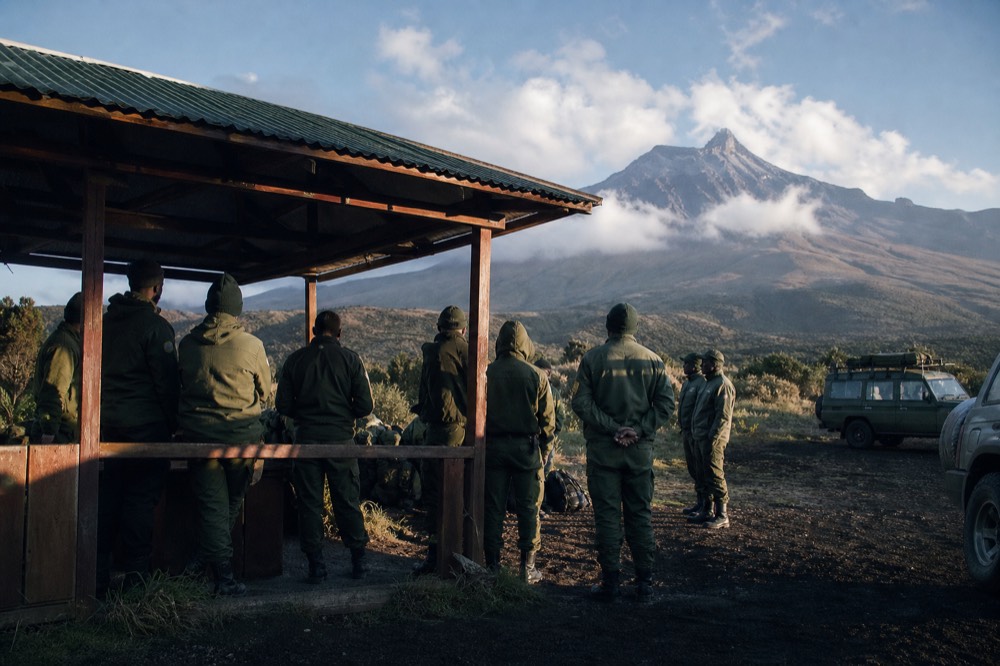
The official RDB booking page is blunt about what the fee attaches to. You report at Kinigi park headquarters at 07:00, you are assigned to a family at the briefing, and from the moment the trackers hand you over, the clock runs for sixty minutes. Seven meters is the standing distance. Flash photography is out. If you turn up with a cold or flu you can be refused, and the minimum age is 15 with no exceptions written anywhere on the page.
| What you get | Inside the $1,500? |
|---|---|
| Park entry for your trek day | Yes |
| Guided tracking to an assigned habituated family | Yes |
| Ranger and tracker team working that morning | Yes |
| One hour in the presence of the gorillas | Yes |
| Road transport, Kigali to Kinigi and back | No |
| Lunch, water and snacks | No |
| Porter hire | No |
| Tips for guides, trackers and porters | No |
| Accommodation before or after | No |
| Rwandan visa | No |
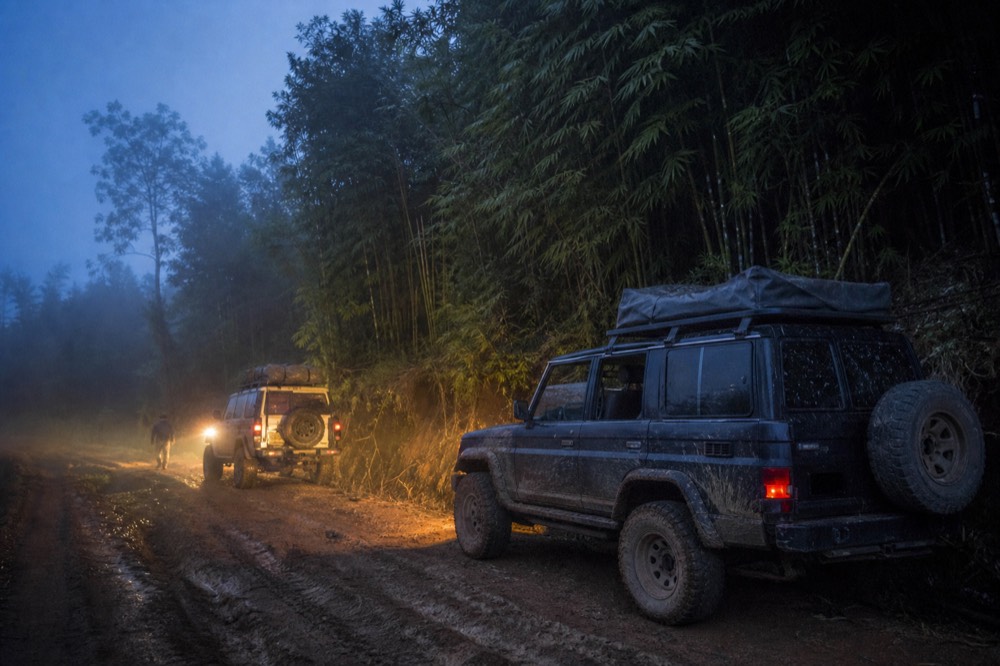
This is why the day-trek market exists at all. Every permit holder still needs a vehicle, a driver who knows the Kinigi turnoff in the dark, and someone to handle the paperwork against a passport copy. The permit does not provide any of that, so a second, competitive, much cheaper market grew up alongside it. That second market is where your actual choice lives, and the permit mechanics behind it are worth reading in full in the Rwanda permit booking and sell-out guide.
Day trek plus permit, or an all-in package: which lands cheaper?
Before the arithmetic, one signpost: travelers pricing the top of the market will find the lodge and helicopter tier costed separately, because five-star nights change the answer more than the trek does.
Buying the two pieces separately wins on price, by a lot. The cheapest day trek plus a permit lands near $1,760 before extras. The one-day package with the permit inside starts at $3,350, and the three-day safari at $3,746, permit included. That gap buys lodging, pacing, and someone else carrying the booking risk.
The arithmetic is worth setting out in full, because operators present prices in two incompatible ways and it is easy to compare the wrong pair of numbers.
| Route | Paid to the operator | Permit status | Permit to add | Realistic total, before extras |
|---|---|---|---|---|
| Lowest-cost day trip from Kigali | from $260 | Not included | $1,500 | about $1,760 |
| Day trek with a Dian Fossey or village add-on | from $300 | Not included | $1,500 | about $1,800 |
| Gorilla or golden monkey day, gorilla option chosen | from $345 | Gorilla permit not included | $1,500 | about $1,845 |
| Flagship 12-hour private day trek | from $360 | Not included | $1,500 | about $1,860 |
| One-day all-in, permit inside the price | from $3,350 | Included | nothing | $3,350 |
| Three-day safari with lodging | from $3,746 | Included | nothing | $3,746 |
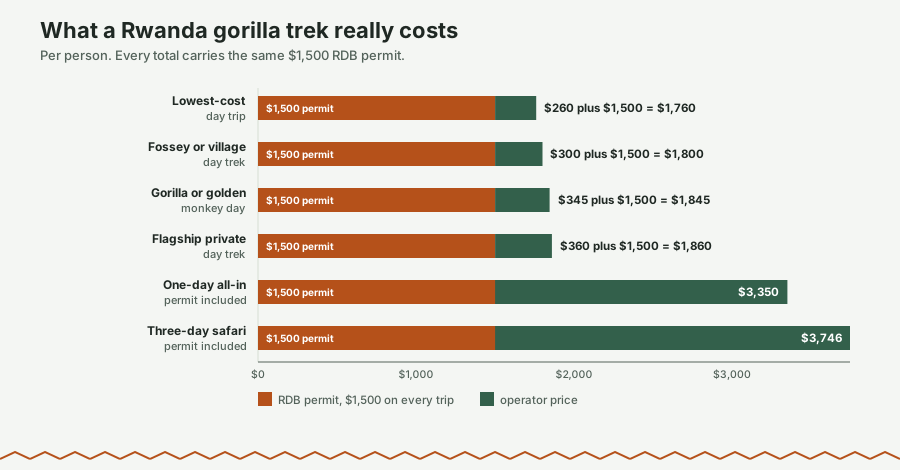
So why does anyone pay $3,350 for a day that can be assembled for $1,760? Three reasons, and none of them are foolish. The first is that a permit-inclusive booking is a single transaction: one payment, one confirmation, one company answerable if the date falls apart. The second is that the all-in listings run longer and include the fees, taxes and lunch that a lean day trek leaves you to sort out. The third is timing. If you decide late and the direct portal has no dates left for your window, an operator holding permits is sometimes the only route in. You can see what the all-in day includes on the listing itself, where the $1,500 permit appears in the included list alongside the Kinigi briefing, lunch and taxes. It runs 13 hours from a Kigali or Ruhengeri pickup and is non-refundable, which is normal for anything with a permit attached. Both bundled options sit together in the permit-included and multi-day section if you want them side by side.
How expensive is it to see gorillas in Rwanda next to Uganda?
Uganda's permit is $800 against Rwanda's $1,500, a $700 saving per person and $1,400 for a couple. Some sources report Uganda cutting to $600 in April, May and November. Rwanda publishes cheaper rates for residents and African citizens, but those are promotional, do not apply from June to October 2026, and never apply to foreign visitors.
| Cost line | Rwanda, Volcanoes NP | Uganda, Bwindi and Mgahinga |
|---|---|---|
| Standard permit, foreign non-resident | $1,500 | $800 |
| Reported low-season permit rate | No foreigner discount published | $600 in April, May and November |
| Permit gap, one traveler | reference point | $700 less |
| Permit gap, a couple | reference point | $1,400 less |
| Permit gap, family of four aged 15+ | reference point | $2,800 less |
| East Africa Tourist Visa | $100, covers both countries plus Kenya | $100, the same visa |
A $2,800 swing on a family trip is not a rounding error, and anyone claiming the two countries cost the same is not looking at the tariffs. What the permit gap does not capture is the rest of the trip. Rwanda's park is about 90 minutes by road from Musanze, which is itself a straightforward drive from Kigali, and the whole thing can be done as a single day out of the capital without an internal flight or a night in a lodge. Whether that structural difference eats the $700 depends entirely on how you were going to travel anyway. The full argument, including the parts where Uganda genuinely wins, sits in the Rwanda and Uganda comparison.
One more thing about the Rwandan rate card. The RDB portal does list $500 for foreign residents in Rwanda and in Africa, and $200 for Rwandan and East African citizens. Those are marked as promotional rates and are explicitly not applicable from June to October 2026. If you hold residency that qualifies you, the paperwork is worth doing. If you are flying in on a tourist visa, the number is $1,500 every day of the year.
What are the costs nobody puts in the brochure?
Set aside $100 to $150 beyond the permit and the tour. A porter runs $10 to $20 with a customary $5 to $15 tip on top. Guides, trackers and rangers take $5 to $25 per person. Visa on arrival is $50 single or $70 multiple entry. A golden monkey permit for a second day is $100.
| Extra | 2026 cost | When and where you pay |
|---|---|---|
| Porter hire | $10 to $20 per trek | Cash, at Kinigi, on the morning |
| Extra porter tip | $5 to $15 | End of the trek |
| Guide, tracker and ranger tips | $5 to $25 per person | End of the trek, usually pooled |
| Visa on arrival, single entry | $50 | Kigali airport or a land border |
| Visa on arrival, multiple entry | $70 | Same counter |
| East Africa Tourist Visa | $100 | In advance or on arrival, first entry in the issuing country |
| Golden monkey permit | $100 per adult | RDB portal, booked ahead |
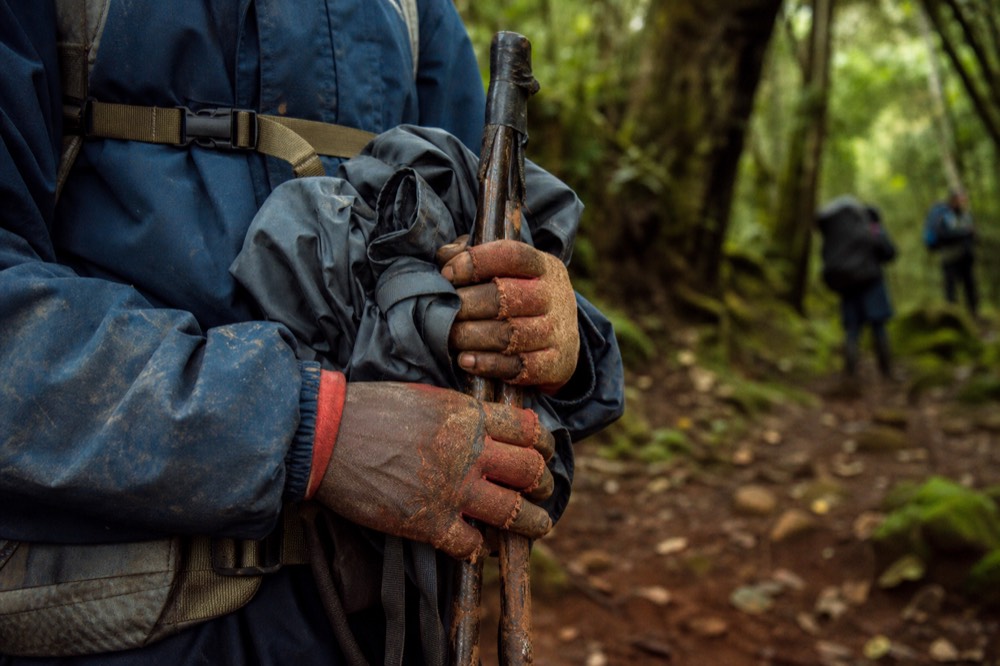
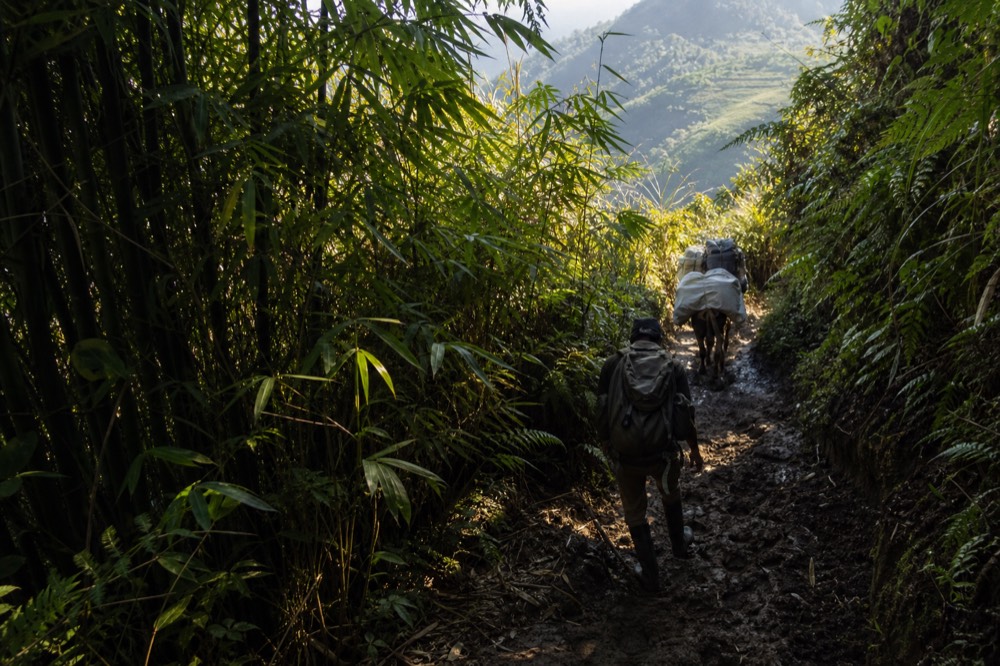
The porter is the single best-value line on this page and the one budget travelers cut first. For $10 to $20 you get someone who carries your daypack up a mud slope at altitude, hauls you over the awkward steps by the elbow, and knows where the nettles are. The official visa rules are simpler than most of East Africa: every nationality can get a visa on arrival, so the $50 is predictable rather than a paperwork risk. East African Community citizens enter free.
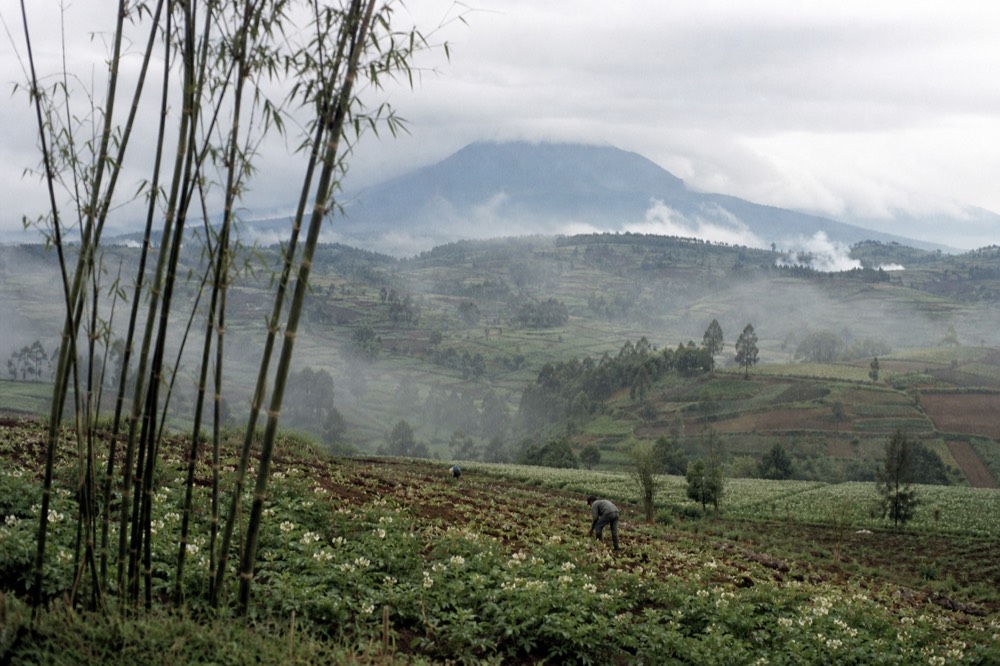
Then there is the second-primate question. A golden monkey permit is $100 for a foreign adult, one-fifteenth of the gorilla price, and the troops live in the bamboo on the same volcano slopes. Travelers who have already flown this far often find that the cheapest good decision on the whole trip is adding a second morning in the park rather than a second country. One listing lets you take either primate on the same booking structure, with the golden monkey permit already inside the $345 price and the $1,500 gorilla permit still bought separately if you pick the gorillas.
Three budget scenarios, priced out
The lean version comes to about $1,840 per person: cheapest ground cost, permit, visa, modest tips. The flagship private day trek lands near $1,955. The one-day package with the permit inside works out around $3,445 once the visa and tips are added, and the three-day safari about $3,856.
| Scenario | Permit | Operator | Visa | Porter and tips | Per person |
|---|---|---|---|---|---|
| Leanest realistic day trip | $1,500 | $260 | $50 | $30 | about $1,840 |
| Day trek with Fossey or village add-on | $1,500 | $300 | $50 | $45 | about $1,895 |
| Flagship 12-hour private day trek | $1,500 | $360 | $50 | $45 | about $1,955 |
| One-day all-in, permit in the price | included | $3,350 | $50 | $45 | about $3,445 |
| Three-day safari, permit and lodging inside | included | $3,746 | $50 | $60 | about $3,856 |
Two travelers should read row four differently from row one. A couple doing the leanest version spends about $3,680 between them and still sleeps in Kigali. A couple on the three-day safari spends about $7,712 and gets two nights near the park, meals, a 4x4 and a guide for the duration. Per hour of holiday, the second is not the extravagance it looks like on a single-line comparison, though the review record on it is thin at 4.7 across three reviews because the listing is newer. If the pace of a 17-hour day is the thing putting you off, the multi-day package options are the section to read.
What can you cut, and what should you never cut?
Cut the vehicle class, the lodge and the trip length. Never cut the porter, the permit lead time or the rain gear. The $100 spread between the cheapest and dearest day trek is real money. The $1,500 permit is fixed, and saving $15 on a porter while climbing between 2,500 and 4,000 meters is a poor trade.
Start with what is genuinely elastic. Trip length is the biggest lever: a day trip from Kigali removes two nights of lodging and every meal that goes with them, and the roads make it viable in a way they are not in most gorilla destinations. Vehicle and group format is the second lever. Shared departures cost less than private ones, and on a route where you spend most of the day sitting still, the difference in experience is smaller than the difference in price.
What does not survive cutting is anything protecting the hour you paid $1,500 for. Trekking while sick can get you turned away at the briefing with no refund path, so travel insurance and a spare date matter more here than on an ordinary tour. Waterproofs are not optional on a mountain that makes its own weather. And leaving the permit until the last minute is the most expensive economy of all, because the ceiling of 80 people a day is absolute and no amount of money creates permit 81.
The lowest ground cost currently on the board is a Kigali pickup at 4:30am with lunch and a Top rated badge, from $260 with the $1,500 permit still to buy separately. If your budget is the binding constraint, that is the row to check availability on first, because every dollar saved there is a dollar that does not change what happens on the mountain.
What happens to your money if the plan changes?
Day treks with free cancellation up to 24 hours put almost nothing at risk on the operator side. The permit is the exposed money: it is issued against a named passport for a fixed date, and the portal publishes no simple refund rule. Permit-inclusive packages are sold non-refundable, so the whole $3,350 or $3,746 is committed at booking.
| Booking | Paid upfront | Cancellation terms | Money genuinely at risk |
|---|---|---|---|
| Permit bought direct from the RDB portal | $1,500 | Issued against your passport for a set date, no simple published refund rule | Treat the full $1,500 as committed |
| Flagship day trek, from $360 | Operator cost only, permit excluded | Free cancellation up to 24 hours | Nothing on the tour, $1,500 on the permit |
| Lowest-cost day trek, from $260 | Operator cost only, permit excluded | Free cancellation up to 24 hours | Nothing on the tour, $1,500 on the permit |
| Fossey or village day trek, from $300 | Operator cost only, permit excluded | Free cancellation up to 24 hours | Nothing on the tour, $1,500 on the permit |
| One-day all-in, from $3,350 | Full price, permit included | Non-refundable | The full $3,350 |
| Three-day safari, from $3,746 | Full price, permit included | Non-refundable | The full $3,746 |
This table explains the thing that confuses most first-time bookers: why the expensive option has worse terms than the cheap one. It is not a trick. Free cancellation is easy to offer when the operator is only risking a driver and a vehicle they can redeploy. Once a company has bought a dated, passport-linked permit on your behalf, that money is gone whether you show up or not, so the terms harden. The convenience premium and the refund risk are the same decision viewed from two angles.
A practical middle path exists. Book the permit yourself for a date you are confident about, then book a free-cancellation day trek around it. You carry the permit risk either way, and you keep the flexibility on everything else.
Is gorilla trekking worth the money?
On raw arithmetic, one hour costs more than many people's monthly rent. On the record, the flagship day trek holds a 5.0 rating across 81 reviews with the operator showing 5+ bookings in the last month. Ten percent of national park tourism revenue goes to communities beside the parks. Whether that clears your bar is a personal call.
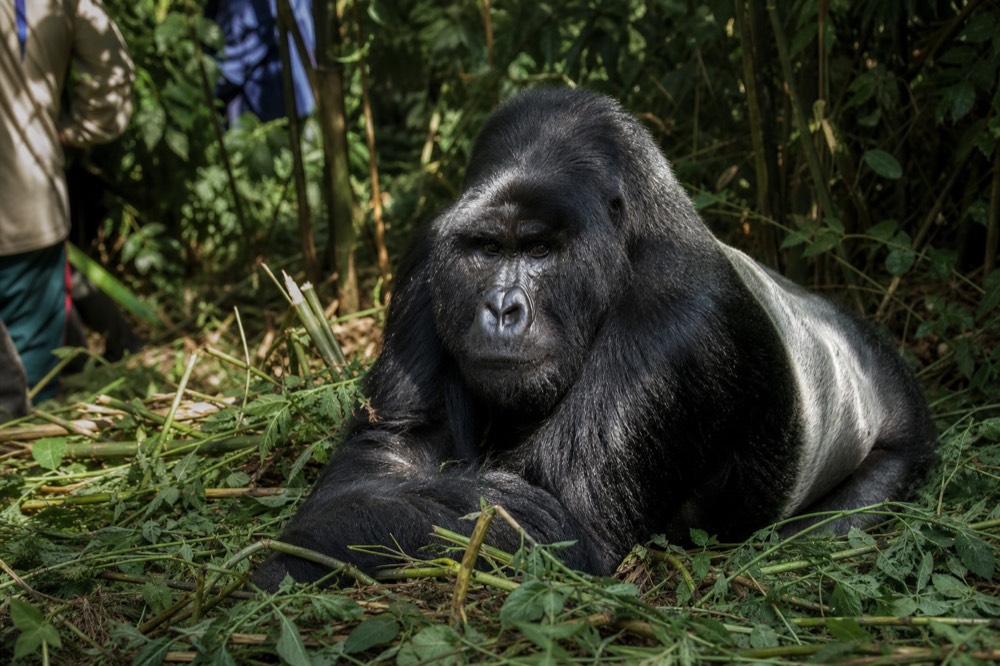
The honest framing is not that $1,500 is cheap. It is that the price is doing a job. Rwanda raised the permit to $1,500 in 2017 and in the same move doubled the share of park tourism revenue flowing to neighbouring communities, from five percent to ten. Scarcity is engineered on purpose: 10 habituated families, eight visitors each, one hour, and no way to buy your way past it. That is the mechanism by which a small population of mountain gorillas can be a tourist attraction without being loved to death, and it is also why the number never falls.
There is a version of this trip that is bad value, and it is worth naming. Flying a long way, buying the permit, and then discovering you cannot handle a steep muddy climb at altitude is a $1,900 disappointment. Read the honest fitness assessment before you book, not after. The people who come back saying it was worth every dollar are, almost without exception, the ones who arrived prepared for the mountain rather than surprised by it. The longer argument on both sides sits in the case for and against the trek, and the economics behind the price tag are unpacked in where the $1,500 actually goes.
Everything above sits on published rates and live listing terms rather than on estimates, which is why the numbers here are less flattering than the ones in a brochure. The official Rwandan tourism pages carry the park rules and the conservation background; the operator listings carry the ground costs. Put the two together and the trip prices itself.
Frequently asked questions
How much does it cost to trek with gorillas in Rwanda?
Around $1,840 to $1,990 per person for a one-day trip from Kigali. The $1,500 RDB permit is the largest single line and is not included in most day-tour prices. Add $260 to $360 for the operator, $50 for a visa on arrival, $10 to $20 for a porter and $20 to $40 in tips. Permit-inclusive packages start at $3,350.
How expensive is it to see gorillas in Rwanda?
Expensive by design. The permit alone is $1,500 for foreign non-residents, fixed by the Rwanda Development Board, with only 80 sold per day across 10 habituated families. Adding transport, guiding, visa, porter and tips brings a lean day trip to roughly $1,840. Uganda's equivalent permit is $800, so the same experience next door costs about $700 less.
Is gorilla trekking worth the money?
The review record is unusually strong: the most-reviewed day trek from Kigali holds a 5.0 rating across 81 reviews. Ten percent of park tourism revenue funds community projects around the parks. Against that, an hour with the gorillas costs more than a month's rent for many people, and a poor fitness match can ruin it. Prepare for the climb and the value case holds.
Does the tour price include the gorilla permit?
Usually not. The day treks from Kigali at $260, $300, $345 and $360 all exclude the $1,500 permit, and the operator helps you buy it against a passport copy. Two listings do include it: the one-day all-in at $3,350 and the three-day safari at $3,746. Both are sold non-refundable because a dated permit is bought on your behalf.
Can I buy the permit myself and book transport separately?
Yes, and it is usually the cheapest route. Buy the $1,500 permit direct from the RDB portal for a specific date, then book a day trek with free cancellation up to 24 hours around it. That combination lands near $1,760 to $1,860 before extras, well under the $3,350 all-in packages, and you keep flexibility on the ground arrangements.
Are there cheaper permits for residents or East African citizens?
Yes. The RDB portal publishes $500 for foreign residents in Rwanda or elsewhere in Africa, and $200 for Rwandan and East African citizens. These are promotional rates and are explicitly not applicable from June to October 2026. Foreign non-residents pay $1,500 year-round with no seasonal discount published.