How Difficult Is the Gorilla Trek in Rwanda? An Honest Fitness Guide
Moderate to strenuous, decided on the morning by where the gorillas slept and how you described your own legs at the briefing.
 By Eric Habimana, gorilla trekking guide since 2015
Short answer
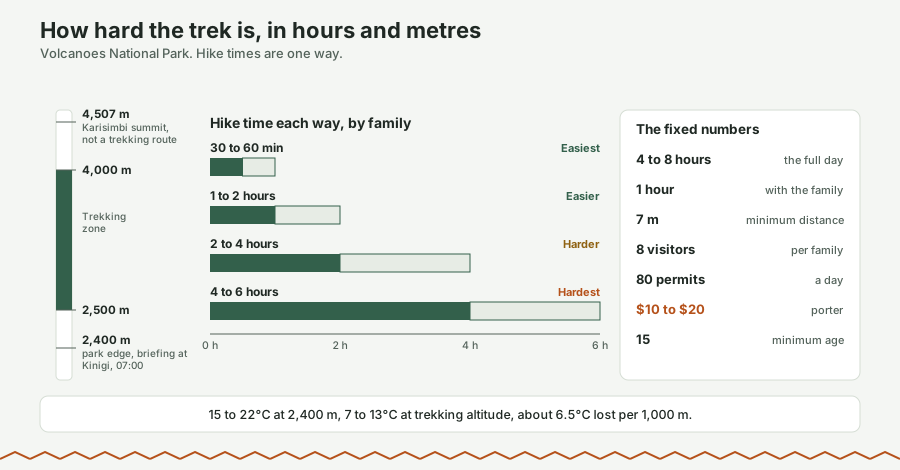
Expect a moderate to strenuous hike of roughly 30 minutes to 4 or 6 hours each way, on steep muddy volcanic slopes at 2,500 to 4,000 m, with a full day of 4 to 8 hours from the 07:00 briefing. Most people finish it. Porters at $10 to $20 make the difference, and the ranger assigning your gorilla family can steer you toward a nearer one.
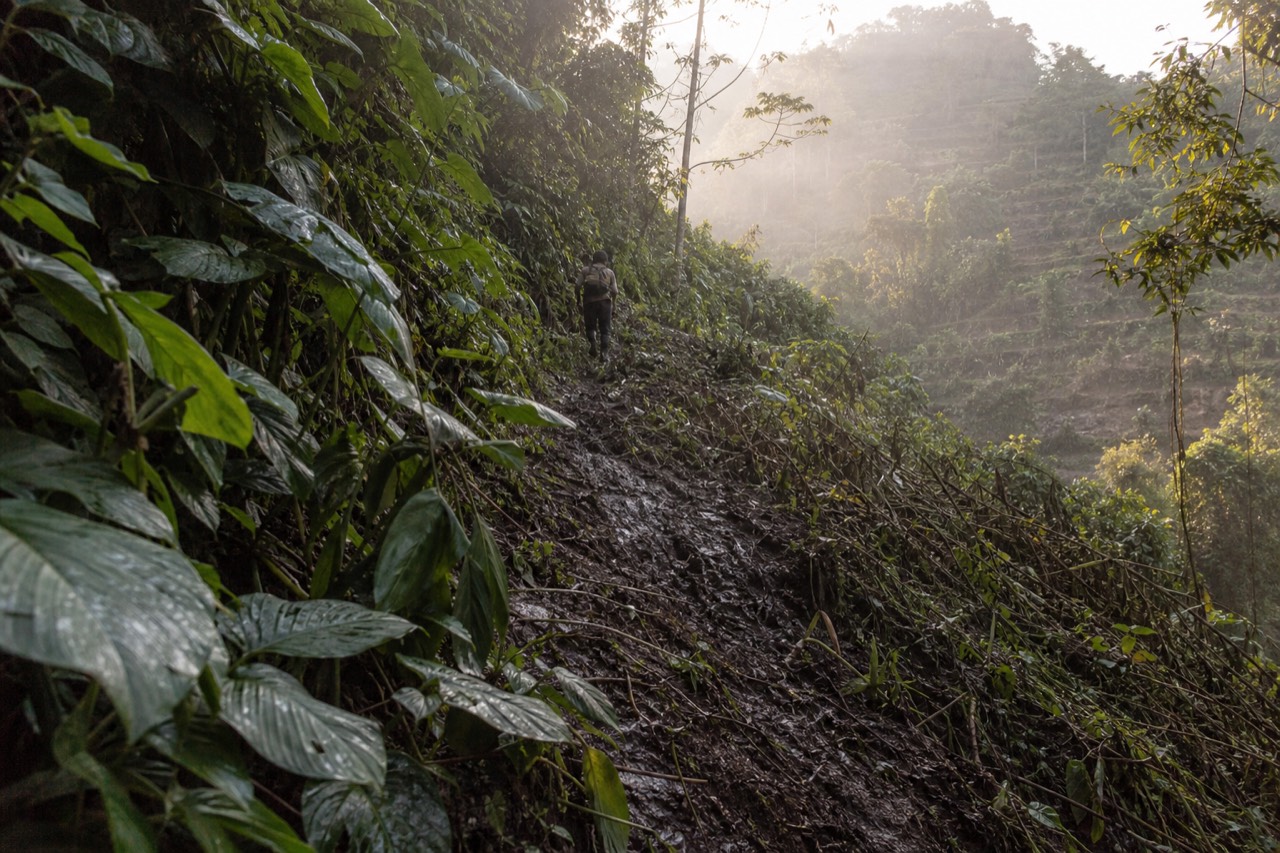
The steepest part of a Rwandan gorilla trek is rarely the mountain. It is the twenty metres of hillside where a machete has just opened a gap in vegetation that grew back since yesterday, the soil underneath is wet volcanic ash, and there is nothing to hold except nettles. That section might last a minute. It is the minute everyone remembers.
Difficulty here is a moving target, and that is the honest headline. Two people can buy the same $1,500 permit for the same morning, stand in the same field at Kinigi at 07:00, and walk 40 minutes or five hours depending entirely on which family the rangers put them with and where that family chose to sleep.
How hard is the trek, really?
Moderate to strenuous. The park's own framing cites steep volcanic slopes, uneven muddy terrain, dense bamboo and nettles, and altitude between 2,500 and 4,000 m. Hiking time to a family runs from about 30 minutes to 4 to 6 hours, and the whole day takes 4 to 8 hours. Most reasonably mobile people complete it, especially with a porter.
The word that best fits is unpredictable rather than hard. Nothing about the trek is technical. There is no climbing, no exposure, no rope, no scramble that requires skill. What there is instead is duration you cannot forecast, ground that gives way, and thin air doing quiet damage to your pace.
Compare it to a hill walk at home and the comparison holds for the first hour and then breaks. A four-hour English hill day is on paths. Here, once you pass the stone buffalo wall that marks the park boundary, there is often no path at all, only the line the trackers cut ahead of you through vegetation that closes behind the last person.
The redeeming detail is that the hard part comes with a reward attached and a clock on it. Once the family is found, you stop. One hour, at 7 m, no rushing. Then a descent that is easier on the lungs and harder on the knees.
How long does the hike actually take?
Anywhere from 30 minutes to 4 to 6 hours in each direction, decided by where the gorilla family moved overnight. The full day, briefing to return, typically runs 4 to 8 hours. No operator can promise you a short trek, because nobody knows the answer until the trackers radio in that morning.
That variance is the single most important thing to understand before you book. Trackers go out at first light to locate each habituated family, and the information reaching Kinigi is only a few hours old. Gorillas move to feed, sometimes far, sometimes barely at all, which means the walk is genuinely different from one day to the next for the same family.
| Hike each way | How it feels | Who it suits | Roughly what you climb |
|---|---|---|---|
| 30-60 minutes | A brisk uphill walk with a muddy finish | Almost anyone mobile | A gentle gain on lower slopes |
| 1-2 hours | A proper hill walk, sweaty, several rests | Anyone who walks regularly | Steady climbing through farmland edge and bamboo |
| 2-4 hours | A long day out, altitude noticeable | Regular hikers, or anyone with a porter | Substantial gain into steeper forest |
| 4-6 hours | Strenuous, hot then cold, mentally long | Fit walkers who trained for it | High into the steepest ground |
Two practical notes sit under that table. The return leg is usually faster than the ascent but harder underfoot, since descending wet volcanic soil is where most falls happen. And the hour with the gorillas sits in the middle of the day at whatever altitude they happen to be, which is why standing still gets cold quickly.
What altitude does to a body that lives at sea level
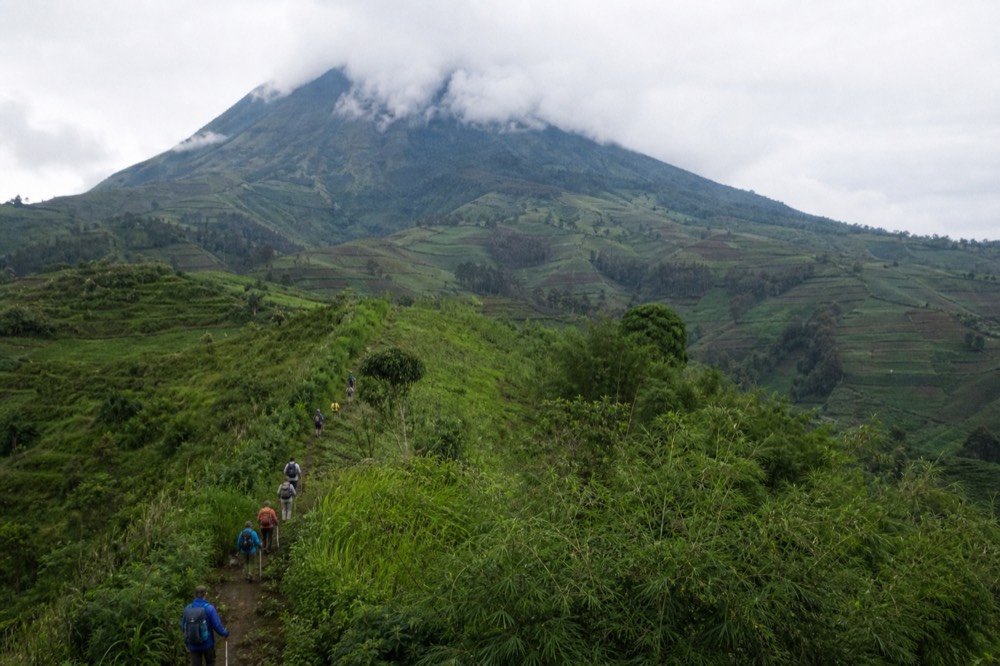
Trekking happens between 2,500 and 4,000 m, in a park that reaches 4,507 m at the summit of Karisimbi. Above roughly 2,500 m, most people notice shorter breath and a slower pace before they notice anything else. Temperature falls about 6.5°C per 1,000 m, so you are working hard in air that stays cool.
This is not altitude sickness territory for most visitors on a day trek, but it is enough to change your arithmetic. A climb that would take you an hour at home takes appreciably longer here, and the mistake is trying to hold your usual pace out of pride in the first twenty minutes.
| Elevation | Where that is | Typical air temperature | What your body notices |
|---|---|---|---|
| ~1,500 m | Kigali, where the day starts | Mild and warm | Nothing |
| ~2,400 m | Park edge, the briefing at Kinigi | 15-22°C, wind-chilled at 07:00 | Cold standing still |
| 2,500-3,000 m | Most gorilla families | Often 7-13°C | Breathlessness on climbs, slower pace |
| 3,000-4,000 m | Higher-ranging families | Colder again, wetter | Real effort, frequent rests needed |
| 4,507 m | Karisimbi summit, not a trekking route | Frost possible | Not part of a gorilla trek |
Two simple habits do most of the work. Drink more than you think you need, since cool air masks how much you are sweating. And walk at a pace where you could still hold a conversation, which is slower than your instinct and faster overall, because you stop less.
Anyone arriving straight off a long-haul flight should give themselves a night in Kigali or, better, near the park. Kigali to Musanze is about 90 minutes by road, with the run up to Kinigi on top, and starting that drive at 04:30 after a red-eye is its own kind of difficulty.
Mud, bamboo and nettles: the terrain in detail
The ground is the real opponent. Volcanic soil holds water and becomes heavy grease, bamboo grows across the route, and stinging nettles line the corridors the trackers cut. Boots, gloves and long sleeves change the experience more than fitness does on any single day.
Sections of the walk go through farmland before the park boundary, which is easy going and often the prettiest part, with terraced fields stepping down toward Musanze. The character changes at the wall. Inside, it is dense, damp forest with no maintained trail to the families, and the machete work in front of you is not theatre.
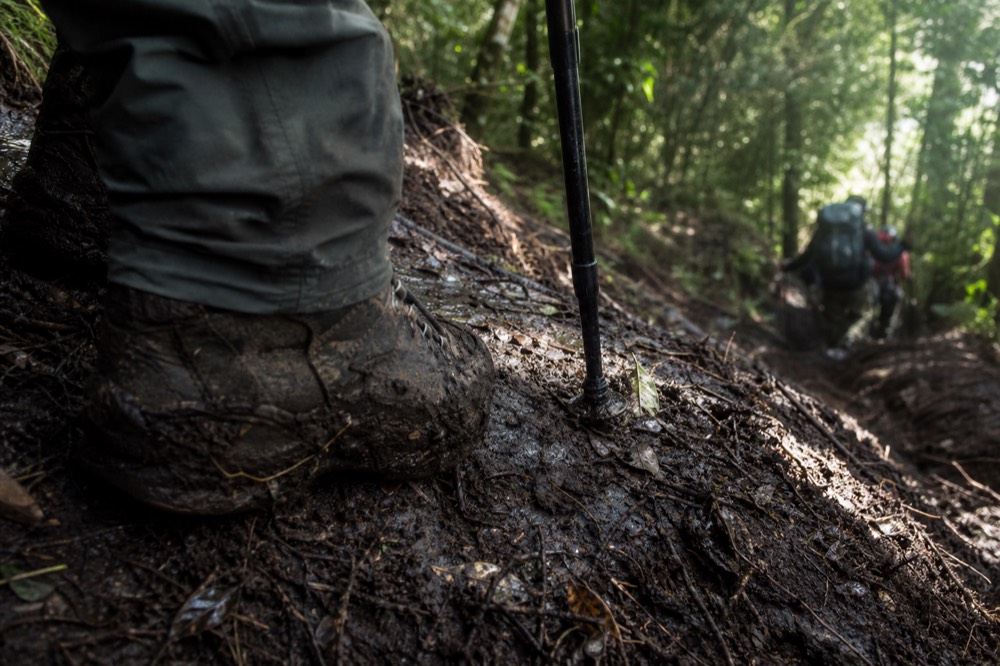
Descents deserve their own warning. On the way down, gravity plus grease equals sliding, and the people who arrive back at the vehicle scraped up are almost always the ones who came down fast. Trekking poles help. So does the hand of a porter, which is a more reliable brake than your own boots.
Wet months make all of this markedly worse, and the month-by-month timing guide shows where those months sit. If you are choosing dates around the physical side rather than around photography, June to September gives you the firmest ground of the year.
The 07:00 briefing: where difficulty is actually decided
Every trek starts with a briefing at the park headquarters in Kinigi at 07:00, and that is where visitors are sorted into groups of no more than 8 and matched to one of the 10 habituated families. Say honestly how you walk. Groups that ask for a nearer family are usually accommodated, because that is what the allocation exists to balance.
Those are the five most useful minutes of the whole day, and most people spend them quietly. Rangers are matching parties to families partly on where the trackers have found each group, partly on what the visitors in front of them look capable of. If you tell them you have a bad knee, or that you are seventy and would rather not do six hours, that information changes the assignment.
The reverse is equally true. Fit hikers who want the long walk to a high-ranging family should say so, because otherwise they may be placed on the gentle option and finish before lunch.
| At the briefing | What happens | What to say |
|---|---|---|
| Arrival, 07:00 at Kinigi | Permits checked against passport details | Have the passport in hand |
| Rules briefing | 7 m distance, one hour, no flash, low voices, no litter | Ask anything now, not on the mountain |
| Group allocation | Parties split into groups of up to 8, matched to a family | Be honest about fitness, age, injuries |
| Porter hire | Porters offered before the drive to the trailhead | Say yes, $10 to $20 plus a tip |
| Transfer to trailhead | Short drive on rough track | Layer up, it is cold standing about |
If you are travelling with a mixed group, this is also where you decide whether to split. Nothing spoils a trek faster than one person feeling responsible for slowing seven others, and rangers deal with that request routinely.
What a porter at $10 to $20 actually changes
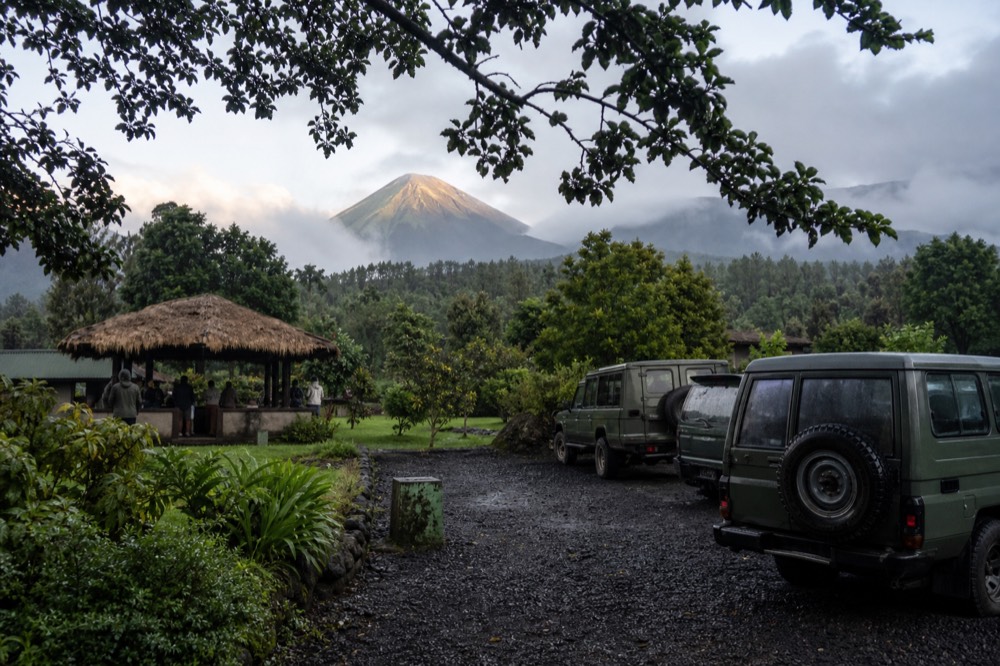
Porter hire at Volcanoes National Park commonly runs $10 to $20 for the trek, with a tip on top. A porter carries your pack, but the real value is a second pair of hands on ground that slides, and a pace-setter who has walked this hillside hundreds of times. It converts a hard trek into a manageable one.
Think about the physics rather than the courtesy. Take five kilos off your back on a 3,000 m climb and you gain more than the weight suggests, because balance improves too. Add a hand on the steep sections and the frequency of the small energy-sapping slips drops close to zero. Those slips are also what the injury record actually consists of, as the gorilla trek injury question sets out.
There is a second reason, and it is not sentimental. Porter work channels trekking money straight into households in the villages around the park, which is a direct part of why the community around Volcanoes National Park has a stake in the gorillas staying protected.
Hire one regardless of your fitness. Fit people fall too, usually going downhill and usually near the end when concentration drops.
| Support | Cost | What it fixes | Worth it? |
|---|---|---|---|
| Porter | $10-20 plus tip | Pack weight, balance, morale, steep pulls | Always |
| Trekking poles | Bring or borrow | Descent control, river crossings | Yes, especially wet season |
| Gardening gloves | A few dollars at home | Grabbing nettles when you slip | Yes |
| Broken-in waterproof boots | Already owned, ideally | Mud, hidden holes, wet feet | Non-negotiable |
| Slower assigned family | Free, just ask | The single biggest cut in total effort | If you need it, ask |
The full kit argument, including why gardening gloves beat technical ones, sits in the packing list built for this mud.
Who completes this trek, and who should think again
There is no published maximum age. The published minimum is 15 years, with no exceptions, and it is enforced. Beyond that, the honest filter is whether you can walk uphill on rough ground for a few hours with rests. People well past retirement finish this trek every week, usually the ones who hired a porter and asked for a nearer family.
The park's own difficulty framing, echoed on the tourism board's gorilla tracking pages, says most visitors complete it successfully with porter support available. That is a fair summary. Failure to reach the gorillas is rare, and when it happens it is usually a decision to turn back rather than a physical collapse.
| Your situation | Realistic verdict |
|---|---|
| Regular walker, any age | Comfortable, with the usual mud and effort |
| Occasional walker, sedentary job | Doable, hire a porter, train beforehand |
| Over 70 and mobile | Regularly done, ask for a nearer family at the briefing |
| Knee or hip problems | Ascent is fine, descent is the risk, take poles and a porter |
| Under 15 | Not permitted, the minimum age is absolute |
| Recent surgery, unresolved heart or lung condition | Discuss with your doctor before buying the permit |
| Cold, flu or any contagious illness on the day | Not permitted to trek, and rangers do turn people away |
| Fear of heights | Not a factor, there is no exposure or scrambling |
That illness line is the one people fight hardest and lose. The rules are explicit that visitors sick with a cold, flu or other contagious illness may be denied access, because gorillas are extremely vulnerable to human respiratory disease. The Rwanda Development Board's published guidelines set that out alongside the distance and photography rules.
How to train in the month before
Four weeks of hill walking with a loaded pack is worth more than four months in a gym. Aim for two long walks a week on the steepest ground you can reach, in the boots you will wear, and add stairs on the days between. Downhill practice matters as much as uphill, because the descent is where legs and knees give out.
The specific adaptations you want are unglamorous: calves and quads that tolerate sustained climbing, ankles used to uneven ground, and a cardiovascular base that copes with working slightly harder for slightly longer in thinner air. None of that requires equipment.
| Week | Two key sessions | Add this | Purpose |
|---|---|---|---|
| Four weeks out | 60-90 min hill walk, 45 min brisk flat | Stairs, 10 min daily | Wake the legs up |
| Three weeks out | 2 hr hill walk with 5 kg pack, 60 min hills | Stairs, 15 min daily | Build climbing endurance |
| Two weeks out | 3 hr walk on rough ground, 90 min hills | Downhill repeats | Prepare knees for the descent |
| One week out | 2 hr easy walk, 45 min flat | Rest, break in nothing new | Arrive fresh, not sore |
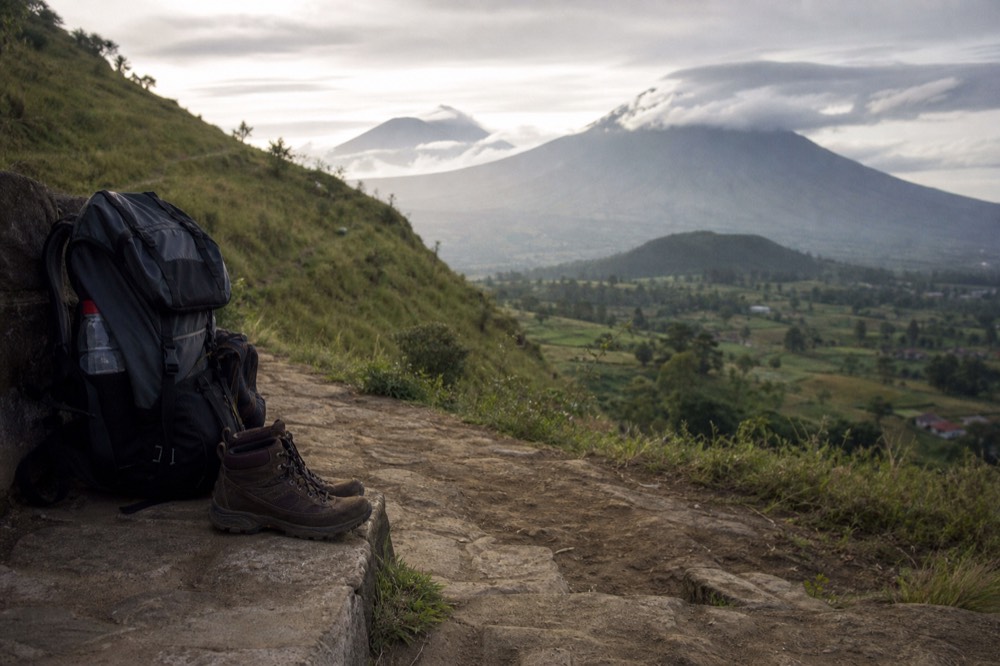
Do all of it in the boots you are taking. That is the part people skip, and blisters at hour three of a five-hour trek are a worse problem than tired legs, because there is no fix for them on the mountain.
Does the trek you book change the difficulty?
Not the hike itself. Every visitor walks to a gorilla family under the same rules, whatever they paid. What the booking changes is the surrounding load: how early the pickup is, how long the vehicle day runs, and whether you sleep near the park or drive back to Kigali the same night.
That surrounding load is not trivial when you are already tired. A 12-hour day from a Kigali hotel means the climb is bookended by three hours of road. A multi-day package puts a lodge and a shower between the descent and the drive home, which is why people who worry about stamina often prefer it.
| Trek | Day length | Permit in the price? | Effect on total fatigue |
|---|---|---|---|
| 1-Day Gorilla Trek from Kigali | 12 hours | No, $1,500 extra | Long road day either side of the hike |
| Gorilla Tracking Day Trip from Kigali | Full day, 4:30am pickup | No, $1,500 extra | Earliest start of the six |
| Gorilla Trek + Dian Fossey or Gorilla Guardians | 6 to 10 hours | No, $1,500 extra | Shorter day, private 4x4 with charging |
| 1-Day All-In Trek, Permit Included | 13 hours | Yes, permit inside | Longest single day, nothing left to arrange |
| 3-Day Gorilla Safari, Permit Included | 3 days | Yes, permit inside | Lodges and rest days absorb the effort |
| Gorilla or Golden Monkey Trek | 1 day | Gorilla no, golden monkey yes | Golden monkey option is the easier hike |
That last row is worth a second look for anyone genuinely unsure about the climb. Golden monkey trekking happens in the same park on lower, gentler bamboo slopes, and the golden monkey guide explains how the two experiences differ. Some visitors do both, on consecutive days.
What the day feels like, start to finish
Pickup between 04:30 and 05:30 in Kigali, roughly 90 minutes to Musanze and on to Kinigi, briefing at 07:00, a short rough drive to the trailhead, then the walk. One hour with the family, the descent, lunch, and back in Kigali in the evening. The hard hours are between about 08:00 and 13:00.
The early start is not padding. Trackers need daylight to locate families and the briefing is fixed at 07:00, so a Kigali departure has to happen in the dark. People underestimate how much that shortened night contributes to how the climb feels at hour three.
Eat properly before you leave, even at 04:30 when you do not want to. Carry snacks regardless of what the tour includes. And treat the first thirty minutes as a warm-up rather than a race, because the group settles into a sustainable pace that suits the slowest walker anyway.
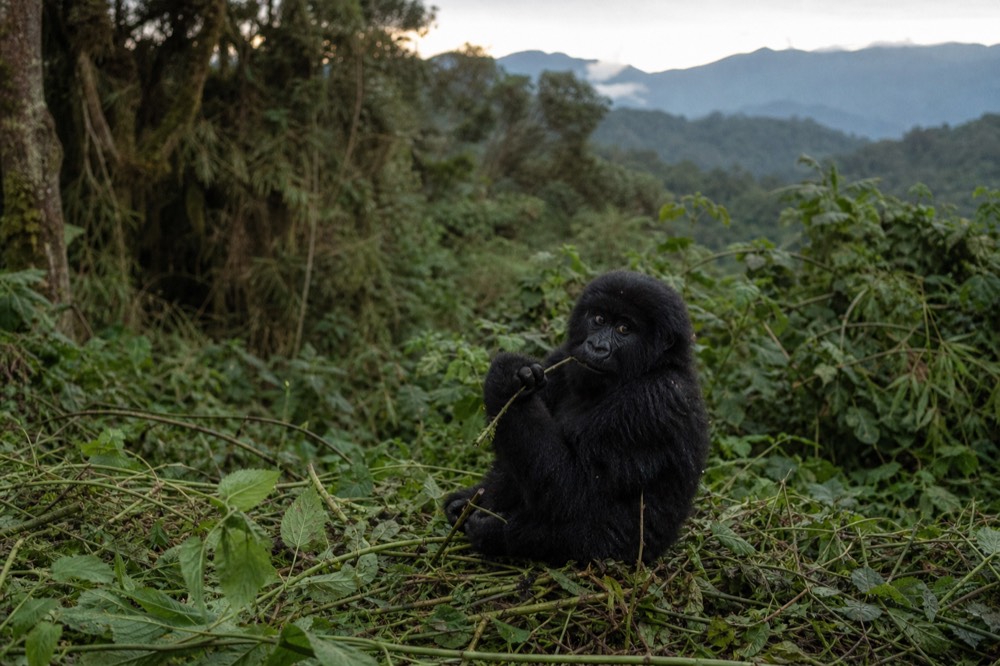
The hour itself is not physically demanding, but it is not restful either. You stand, often on a slope, at 7 m from the family, keeping voices low and movements slow. Knowing the etiquette in advance helps, and our piece on why guides tell you not to smile covers the rule that surprises the most people.
For the whole schedule laid out properly, see the hour-by-hour day trek walkthrough, and to compare every format at once, the full trek lineup puts the six side by side. Anyone still deciding between a lean day and a permit-inclusive booking should read the cost breakdown first.
Two of the six options change the shape of the day rather than the hike. The Dian Fossey combination runs 6 to 10 hours from $300 in a private 4x4 with Wi-Fi and charging, permit bought separately at $1,500, and you can see which dates it currently has open. If you would rather spread the effort across several days with the permit already inside the price, the 3-day safari runs from $3,746 including one permit per person, and it is worth checking its live availability well ahead of a dry-season date.
The five things that make it easier
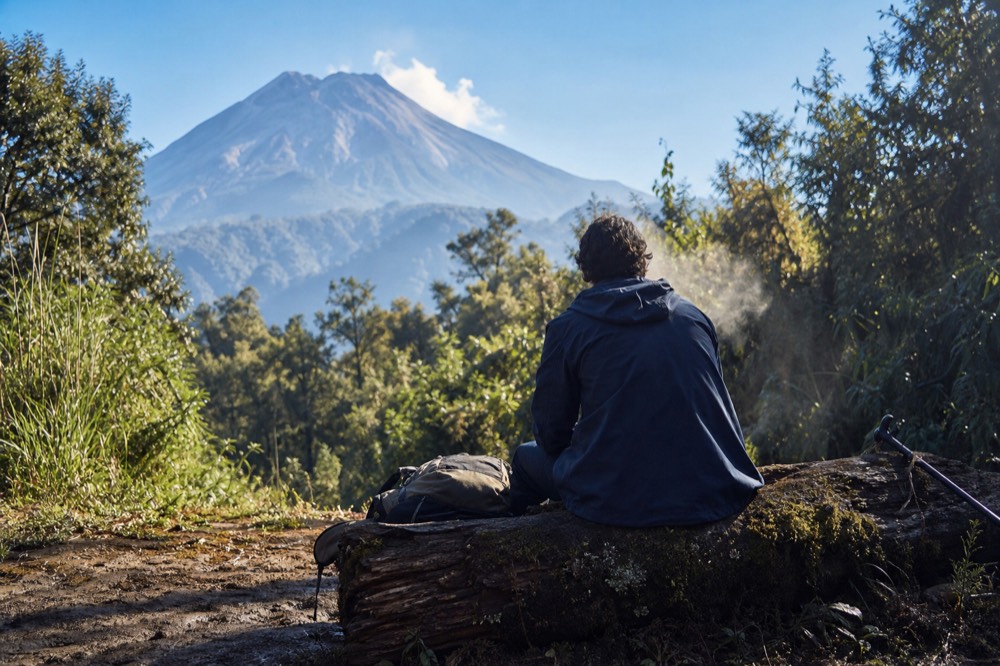
Hire the porter. Tell the ranger the truth about your fitness. Walk slower than feels natural for the first half hour. Take poles for the descent. And do not trek on four hours of sleep after a long-haul flight if you can avoid it. None of those cost much, and together they change the day.
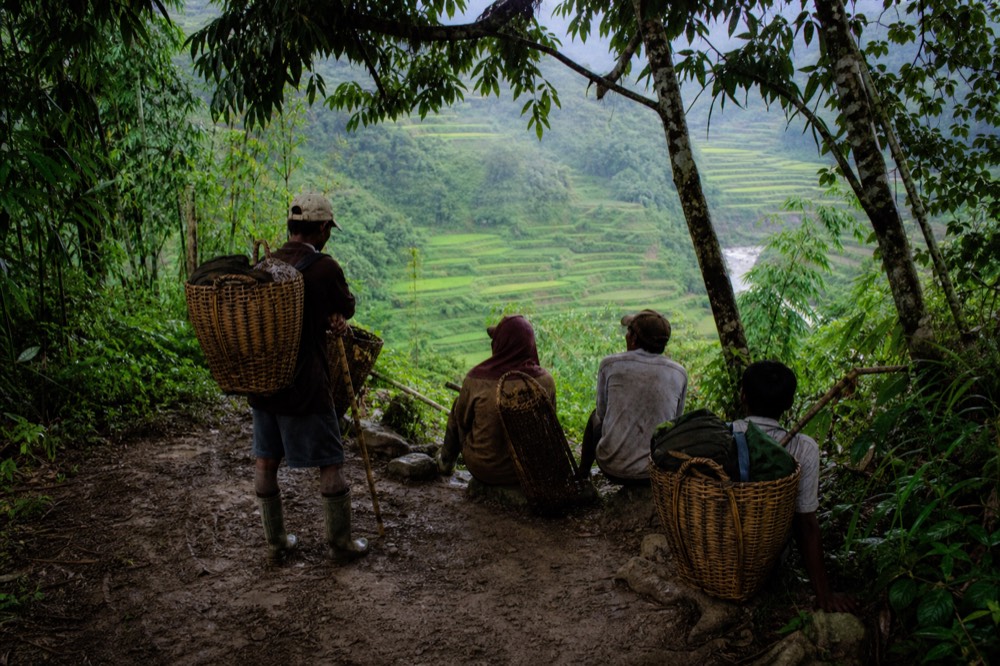
The pattern behind all five is the same: the trek punishes optimism and rewards preparation that costs almost nothing. Nobody regrets the twenty dollars for a porter. Plenty of people regret the pride that kept them from mentioning a bad knee at 07:00.
One more that belongs on the list without fitting the pattern. Book your permit and your date deliberately rather than opportunistically, since the season you land in decides how much of the mud you meet. The permit walkthrough explains how the 80 daily permits are actually sold, and the park guide covers the sectors and access roads that shape your morning.
Questions people ask about difficulty
How difficult is the trek to see the gorillas in Rwanda?
Moderate to strenuous, with steep muddy volcanic slopes, dense bamboo and nettles, at altitudes of 2,500 to 4,000 m. Hiking time runs from about 30 minutes to 4 to 6 hours each way depending on where your assigned family moved overnight. Most reasonably mobile visitors complete it, particularly with a porter at $10 to $20.
How difficult is the Rwanda gorilla trek?
It is a hard walk rather than a technical climb. There is no scrambling, exposure or rope work, but there is unpredictable duration, wet volcanic ground that slides, and thin air at 2,500 m and above. The full day runs 4 to 8 hours from the 07:00 briefing at Kinigi, of which the hiking is usually one to four hours each way.
Can an unfit person do gorilla trekking?
Often yes, with two decisions made early. Hire a porter, and tell the ranger at the 07:00 briefing that you would prefer a nearer gorilla family, since allocation to one of the 10 habituated families happens there. Four weeks of hill walking beforehand makes a large difference. Anyone with an unresolved heart or lung condition should speak to a doctor first.
What is the age limit for gorilla trekking in Rwanda?
The minimum age is 15 years, with no exceptions, and it is checked against passport details at the briefing. No maximum age is published, and older visitors trek regularly, usually with a porter and a nearer family assignment. Anyone visibly sick with a cold or flu is turned away regardless of age, because gorillas catch human respiratory infections.
What happens if I cannot keep up?
The group walks at the pace of the slowest member, and rangers build in rests. A porter takes your pack and steadies you on the worst ground. Turning back is possible and occasionally happens, though it is rare. Raising your concerns at the 07:00 briefing, before family assignment, is far more effective than raising them on the slope.
Is the descent harder than the climb?
For many people, yes. Descending wet volcanic soil is where slips happen and where knees complain, particularly at the end of a long day. Trekking poles and a porter's hand are the two fixes. Practising downhill walking in the weeks before you travel is the most-skipped piece of preparation and one of the most useful.