Rwanda Gorilla Permits: Price, Booking and Sell-Out Dates (2026)
Eighty permits a day, one price for foreigners, and a booking portal that does not negotiate.
 By Eric Habimana, gorilla trekking guide since 2015
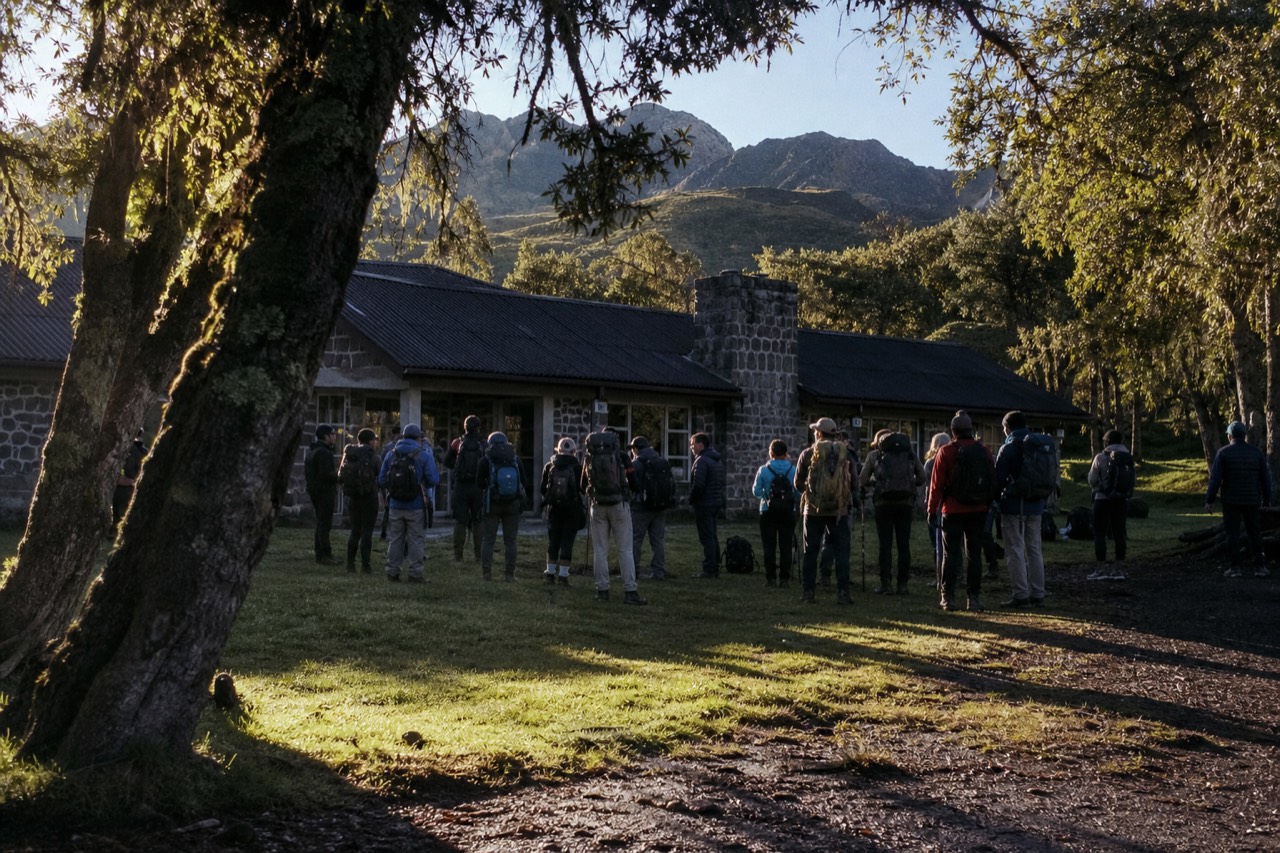
Short answer
A gorilla permit costs $1,500 for foreign non-residents, sold only by the Rwanda Development Board through its own booking portal on a first-come, first-served basis. Exactly 80 exist per day: 10 habituated families, eight visitors each. Rwandan and East African citizens pay $200 and residents in Rwanda or Africa pay $500, but those promotional rates do not apply from June to October 2026. Minimum age is 15, no exceptions.
There is a moment on the Rwanda Development Board's booking page where the whole trip stops being a plan and becomes a commitment. You have picked a date. You have typed a passport number into a box. The price on the screen says $1,500, and it will say $1,500 whether you are booking eleven months out or eleven days out, whether it rains that week or the mountain is under perfect blue sky.
That fixed number is the most misunderstood thing about a Volcanoes National Park trek. It is not a tour price, it is a rationing device. Rwanda sells a hard ceiling of 80 permits a day, and the fee exists to make that ceiling stick without a lottery. Everything else about the trip, the vehicle, the guide, the lunch, the lodge, is a competitive market with real price variation. The permit is not. Comparing the gorilla trekking Rwanda tours on offer makes far more sense once you know which side of that line each price sits on.
What does a Rwanda gorilla permit cost in 2026?
Foreign non-residents pay $1,500 per person, year-round, with no seasonal discount published. The portal also lists $500 for foreign residents in Rwanda or elsewhere in Africa, and $200 for Rwandan and East African citizens. Those lower tiers are marked promotional and are not applicable from June to October 2026.
| Visitor category | Permit price | Status |
|---|---|---|
| Foreigner, non-resident | $1,500 | Standard rate, applies all year |
| Foreign resident in Rwanda | $500 | Promotional, not applicable June to October 2026 |
| African citizen or foreign resident in Africa | $500 | Promotional, not applicable June to October 2026 |
| Rwandan citizen | $200 | Promotional, not applicable June to October 2026 |
| East African citizen | $200 | Promotional, not applicable June to October 2026 |
The word "promotional" is doing real work in that table and most travel sites skip it. It means the discounted tiers are a policy decision Rwanda can withdraw, and it has already withdrawn them for the five-month block running from June to October 2026, the exact stretch when the trails are driest and demand is highest. If you hold Rwandan or East African citizenship, or residency in Rwanda or elsewhere in Africa, the practical advice is to check your qualifying category on the official RDB booking page against your travel window before you assume the lower price applies.
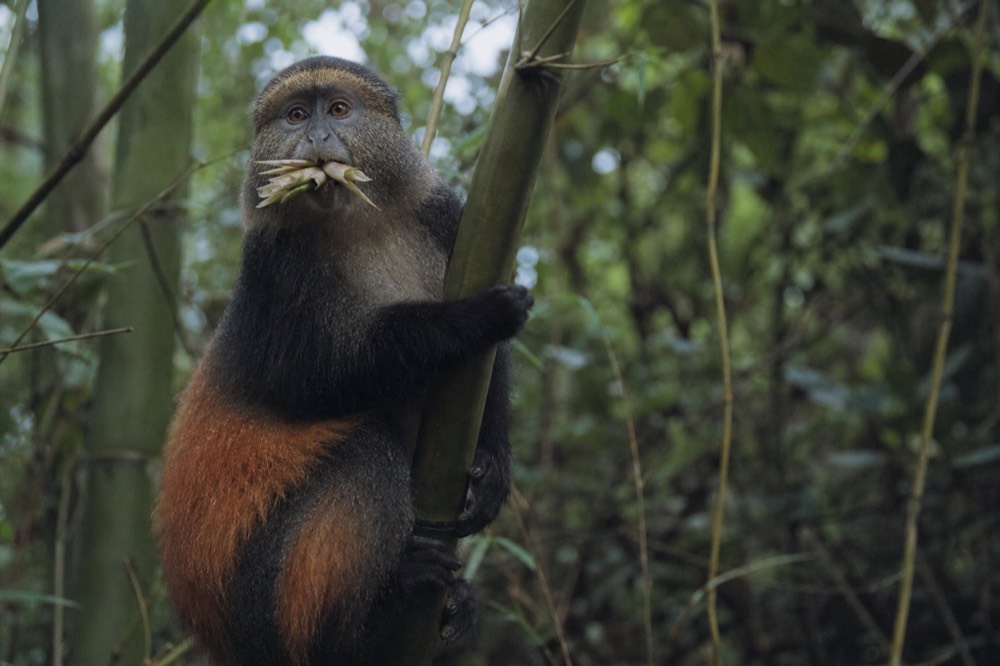
There is a second permit on the same portal that almost nobody costs into the trip. Golden monkeys live in the bamboo belt on the same volcano slopes, and the permit to see them is a fifteenth of the gorilla price.
| Category | Golden monkey permit |
|---|---|
| Foreigner, adult | $100 |
| Foreign resident in Rwanda, adult | $65 |
| Foreign resident in Rwanda, student or child | $45 |
| East African citizen, adult | $65 |
| East African citizen, student or child | $45 |
| Rwandan citizen, adult | RWF 4,000 |
| Rwandan citizen, student or child | RWF 2,000 |
A second morning in the park for $100 is the best-value line item in Rwandan tourism, and it is the reason plenty of visitors turn a one-day trip into two. The golden monkey trekking guide covers what the experience is actually like, which is louder, faster and considerably less solemn than an hour with a silverback.
How do you actually buy one? The RDB portal, step by step
Permits are sold through visitrwandabookings.rdb.rw on a first-come, first-served basis. You pick a date and a visitor category, enter passport details for each traveler, pay, and the permit is auto-issued against those details. There is no waiting list, no queue and no way to jump ahead of someone who booked before you.
| Step | What happens | What you need in hand |
|---|---|---|
| 1 | Open the RDB booking portal and select mountain gorilla tracking | A firm trek date, not a rough month |
| 2 | Choose the date and your visitor category | Proof of residency or citizenship if claiming a lower tier |
| 3 | Enter traveler details | Full name and passport number exactly as they appear on the document |
| 4 | Pay | An internationally usable card, $1,500 per foreign adult |
| 5 | Permit is issued automatically | Nothing, the system issues against the details you entered |
| 6 | Report at Kinigi on the day | The same passport you booked under, at 07:00 |
Step three is where people create problems for themselves. The permit is tied to the passport number you type in, so a booking made under an expiring passport that you then renew is a conversation you do not want to be having at a briefing shelter at seven in the morning. Book under the document you will physically carry.
Step six catches out anyone who has not looked at a map. The official park information puts the reporting point at the RDB offices in Kinigi, and Kigali to Musanze alone is about 90 minutes of driving before you continue on to Kinigi. Hitting a 07:00 briefing from a Kigali hotel means leaving in the dark, which is exactly why the day treks from the capital start with 4:30am pickups rather than a civilised breakfast.
Why do only 80 permits exist per day?
Ten gorilla families are habituated for public visits, and each accepts a maximum of eight visitors per day. Ten times eight is the entire national supply: 80 permits daily, 560 a week, roughly 29,200 a year. No amount of money creates permit number 81, which is why the calendar, not the budget, is usually the binding constraint.
| Supply line | Number |
|---|---|
| Habituated families open to public visits | 10 |
| Maximum visitors per family per day | 8 |
| Permits available per day | 80 |
| Permits available per week | 560 |
| Permits across a 31-day month | 2,480 |
| Permits across a full year | about 29,200 |
| Hours of visitor contact sold per family per day | 1 |
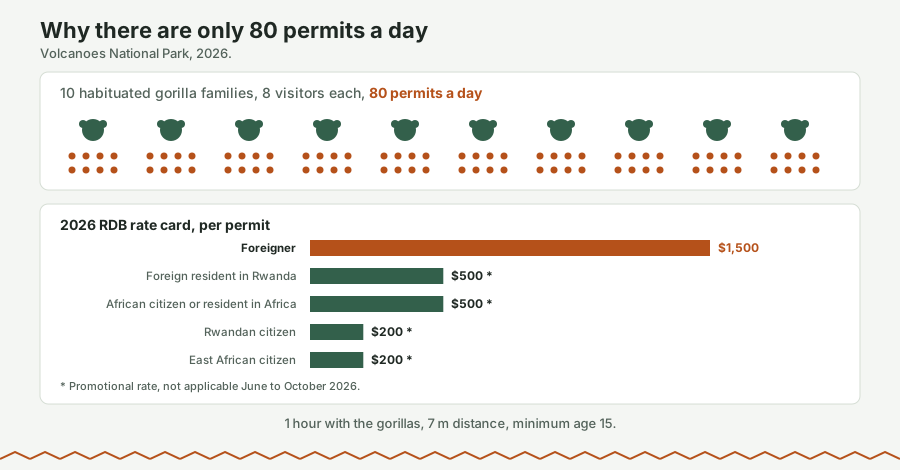
The scarcity is deliberate and it shapes every downstream decision. An hour is an hour because sixty minutes of daily human contact is what the habituation programme is built around. Eight is eight because a larger crowd changes how a family behaves. Seven meters is the standing distance for disease reasons that became a lot less abstract to everyone after 2020. These are not the kind of rules a guide bends for a generous tip, and travelers who arrive expecting them to be soft tend to leave disappointed.
The practical translation: your date is worth more than your budget. Two people who decide in March to trek in July are competing for a share of 80 slots per day against every tour operator holding inventory, every lodge selling packages, and every independent traveler doing the same arithmetic.
Should you buy it yourself, or let an operator do it?
Buying direct from the portal is cheapest: $1,500 plus a day trek from $260 lands near $1,760. Operator-assisted booking costs the same $1,500 with the paperwork handled against your passport copy. Permit-included packages start at $3,350 for one day and $3,746 for three, sold as one non-refundable transaction.
| Route | Who buys the permit | What you pay | Best when |
|---|---|---|---|
| Direct from the RDB portal | You | $1,500 plus a separate day trek from $260 to $360 | Your date is fixed and you are booking well ahead |
| Operator-assisted | The operator, against your passport copy | $1,500 plus the tour price | You want the paperwork handled without the bundled premium |
| Permit inside the tour price, one day | The operator, in advance | from $3,350, permit included | Late decisions, or you want a single confirmation |
| Permit inside the tour price, three days | The operator, in advance | from $3,746, permit and lodging included | You want the trek paced over a proper trip |
The middle row is the one most first-time visitors do not know exists. Every day trek on the market at $260 to $360 excludes the $1,500 permit, and the operators running them will still walk you through securing one against a passport copy. You pay the RDB the same $1,500 either way. What you are buying from the operator at that point is competence with the portal and the timing, not a marked-up permit.
The bundled route earns its premium in exactly one situation, and it is worth being precise about it. If your dates are close and the portal shows nothing for your window, an operator who already holds permits is the only remaining door. The all-in day at $3,350 puts the $1,500 permit in the included list alongside lunch, park fees and taxes, runs 13 hours from a Kigali or Ruhengeri pickup, and holds a 5.0 rating across 11 reviews. You can check what sits inside that price on the listing before deciding whether the convenience is worth roughly $1,500 over assembling it yourself. Both bundled options are grouped together in the permit-included and multi-day section.
Who is allowed to trek, and what are the rules on the mountain?
Minimum age is 15 with no exceptions written anywhere on the official page. Groups are capped at eight visitors per family, contact is limited to one hour, and the standing distance is 7 meters. Flash photography is banned, and anyone with a cold, flu or other contagious illness can be refused access at the briefing.
| Rule | The official position |
|---|---|
| Minimum age | 15 years, stated flatly, no exceptions |
| Group size | Maximum 8 visitors per habituated family |
| Time with the gorillas | One hour |
| Distance | 7 meters, about 22 feet |
| Photography | Permitted, no flash |
| Illness | Do not trek with a cold, flu or other contagious illness; you may be denied access |
| Behaviour | Keep voices low, no rapid movements, cover coughs and turn away, no spitting, no litter |
| Reporting time and place | 07:00, RDB offices at Kinigi |
| Trekking altitude | Between 2,500 and 4,000 meters |
The age rule ends more family trips than anything else on this page. Fourteen is fourteen, and a birthday two weeks after your travel dates does not help. Families traveling with younger children usually split the day: the qualifying adults trek while everyone else takes the golden monkey option or the Dian Fossey campus, which have no equivalent gate at 15.
The illness rule deserves the same respect. Mountain gorillas share enough of our biology to catch what we carry, and a population this small cannot absorb a respiratory outbreak. Turning up visibly sick risks being refused at Kinigi with your $1,500 already spent, so the honest calculation is to build a spare day into the trip if you can, and to take the 7-meter rule as an instruction rather than a suggestion once you are up there. Anyone weighing whether their fitness matches the terrain should read the honest difficulty assessment first.
Five ways people lose a permit they already paid for
The permit is dated, passport-linked and gate-checked at 07:00. It is lost by renewing the passport it was issued against, by being under 15 on the day, by arriving with a cold, by missing the Kinigi briefing, and by booking a date before any transport to the trailhead is confirmed. All five are avoidable.
The passport problem is the quietest of the five because nothing goes wrong until the morning of the trek. Your permit carries the number you typed into the portal. Renew the document between booking and travelling, and the number on the paper in your pocket no longer matches the one in the system. Book under the passport you will physically carry, and if a renewal is already scheduled, wait for the new document before you buy.
The age gate is absolute and it catches whole families. Fifteen is the stated minimum, written three separate ways on the official page, with no discretionary route around it and no documentation that changes the answer. A traveler who turns 15 the week after the trek date does not qualify on the trek date.
Illness is the one people gamble on. Because gorillas catch human respiratory infections, arriving at the briefing with a cold or flu can end the day before it starts, and the rules put that decision in the rangers' hands rather than yours. Building one spare day into the itinerary is the cheapest insurance available, since it converts a total loss into a rescheduling problem.
Timing is the mistake that feels unfair afterward. Reporting is at 07:00 at Kinigi, and Kigali to Musanze alone is about 90 minutes of driving before the road continues to the park headquarters. A 4:30am pickup is not the operator padding the schedule, it is the arithmetic of the distance plus a margin for weather and traffic. Travelers who book their own permit and then arrange transport casually are the ones who arrive at 07:20 to find their group has gone.
The fifth is the least dramatic and the most common: buying a date with no plan for reaching the trailhead. The permit covers nothing but the trek itself, and Kinigi is not somewhere you improvise a taxi at five in the morning. Fix the permit date, then fix the vehicle, in that order and on the same day if you can.
When do dry-season dates disappear?
Rwanda's dry seasons run June to September and December to February, and those are the windows where 80 daily permits meet the heaviest demand. Official RDB and tourism pages do not publish how far ahead high-season dates sell out, so the workable rule is to buy the permit the moment your dates are firm rather than trusting a lead time you read somewhere.
| Months | Season | Why demand concentrates | Resident and citizen promo rates |
|---|---|---|---|
| June to September | Long dry season | Firmest trails, peak visitor season | Not applicable in 2026 |
| October | Short rains beginning | Shoulder conditions, thinner crowds | Not applicable in 2026 |
| November | Short rains | Quietest window across the region | Applicable |
| December to February | Short dry season | Second dry peak, holiday travel | Applicable |
| March to May | Long rains | Wettest and muddiest trekking | Applicable |
Notice the overlap in the right-hand column. The suspension of promotional rates runs June through October, covering the entire long dry season plus its shoulder. That is not a coincidence: Rwanda is protecting its highest-demand months from discounted inventory, and it tells you something useful about how tightly those dates run.
Here is the part most guides get wrong by asserting a number. Plenty of sites will tell you permits sell out six months ahead, or three, or twelve. None of those figures appear on the RDB portal or the official tourism pages, because Rwanda does not publish inventory data. What is published is the cap: 80 a day. Combine that with a five-month stretch where the country has removed its discounted tiers, and the sensible behaviour is obvious without needing an invented lead time. Fix your date, buy the permit, then build the rest of the trip around it. Month-by-month conditions, including which rainy weeks are genuinely worth avoiding, are covered in the best months breakdown.
If your window falls inside one of those dry blocks and the portal is already thin, a multi-day package is the practical workaround, because the operator is selling a permit it has already secured. The three-day safari carries one tracking permit per person inside its $3,746 price along with lodging, meals, a 4x4 and a guide, run by Nkuringo Safaris. It is a newer listing at 4.7 across three reviews, and worth a look at the dates it still has open if a fixed dry-season week is what you are working around.
What happens to your $1,500 if you cannot go?
The permit is issued against a named passport for a fixed date, and the portal does not publish a plain refund or transfer rule. Treat the money as committed once the date is confirmed. Day treks bought separately usually carry free cancellation up to 24 hours, while permit-included packages are sold non-refundable.
This asymmetry confuses people, and it is worth understanding rather than resenting. A day-trek operator cancelling your booking loses a driver-day they can resell. A company that has already bought a dated, passport-linked permit on your behalf has spent money that does not come back, so those listings are non-refundable, both the $3,350 one-day version and the $3,746 three-day safari. The generous cancellation terms sit on exactly the bookings where the operator carries no permit risk.
The structure suggests a sensible hedge. Buy the permit yourself for a date you are genuinely confident about, then book a free-cancellation day trek around it. Your $1,500 is exposed either way, but everything else stays flexible, and travel insurance that covers trip interruption becomes a far more sensible purchase than usual when a single non-transferable fee is four-fifths of the trip cost. The wider arithmetic on that trade sits in the full cost breakdown.
If the permit is the only reason you are hesitating, the economics behind the price explain why the figure is engineered rather than arbitrary, and why it is unlikely to fall.
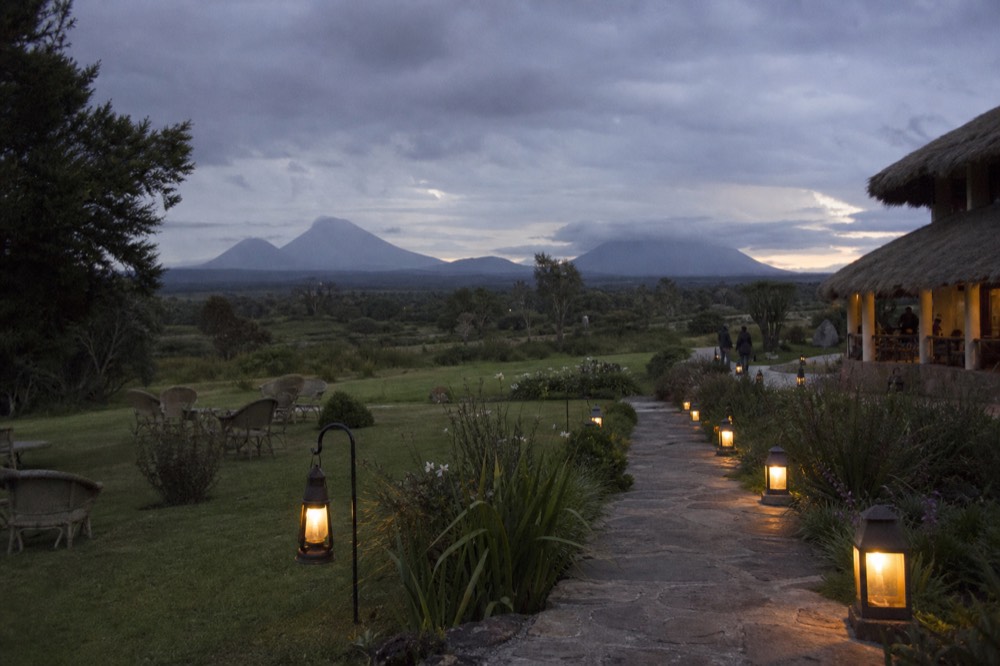
One last practical note on entry, because it trips up itineraries more than it should. Rwanda offers a visa on arrival to every nationality, so the permit is the hard gate and the visa is not, and the official entry requirements confirm there is no advance application to line up before you can commit to a trek date. If you are combining Rwanda with Uganda or Kenya, the $100 East Africa Tourist Visa covers all three and can be a better buy than two single-entry visas at $50 each. If the permit price itself has you looking across the border, the Rwanda against Uganda comparison weighs the $700 saving against the road hours it costs.
Once the permit is in hand, the remaining decisions get considerably easier. What you are choosing between is a pickup time, a vehicle, a group format and whether you want a Dian Fossey or village add-on tacked onto the afternoon. Everything on the mountain is identical no matter which company drove you there, which is why the lowest-cost transfer from Kigali at $260 with lunch, permit excluded, and the $360 flagship private run reach exactly the same briefing shelter at exactly the same hour.
The park itself, its history and what else sits inside its boundaries are covered in the Volcanoes National Park guide.
Frequently asked questions
How much is a gorilla trekking permit in Rwanda?
$1,500 per person for foreign non-residents, sold by the Rwanda Development Board. Foreign residents in Rwanda or Africa are listed at $500 and Rwandan or East African citizens at $200, but those are promotional rates and do not apply from June to October 2026. The price does not vary by season for foreign visitors.
How far in advance should I book a Rwanda gorilla permit?
As soon as your date is firm. Official sources do not publish sell-out lead times, so any specific figure is guesswork. What is certain is the supply: 80 permits a day across 10 habituated families, with the heaviest demand in the June to September and December to February dry seasons. Buy the permit first, then build the trip around it.
Can I buy a gorilla permit on arrival in Rwanda?
The portal sells first-come, first-served and auto-issues against your passport details, so in principle a permit can be bought at any time an unsold date exists. In practice, arriving without one during a dry-season month means competing for whatever is left of 80 daily slots. Operators holding permit-inclusive inventory are the usual fallback for late decisions.
Is the gorilla permit refundable?
The RDB portal does not publish a straightforward refund or transfer rule, and the permit is issued against a named passport for a fixed date. Treat the $1,500 as committed money once you confirm. Tours that bundle the permit, at $3,350 for one day and $3,746 for three, are explicitly sold as non-refundable for the same reason.
What is the minimum age for gorilla trekking in Rwanda?
15 years. The official RDB page states it three separate ways and lists no exceptions, discretionary allowances or documentation route around it. Families traveling with younger children generally split the day, with qualifying adults trekking while the rest take the golden monkey option, which costs $100 for a foreign adult.
Do day tours from Kigali include the permit?
Almost none do. Day treks at $260, $300, $345 and $360 all exclude the $1,500 permit, though the operators help you buy one against a passport copy. Two listings include it in the price: the 13-hour all-in day at $3,350 and the three-day safari at $3,746, both non-refundable because a dated permit is purchased on your behalf.