Is Rwanda Safe to Visit in 2026? Advisories, Kigali and the Border, Honestly
The advisory is real, the 10-kilometre band is real, and neither one is the whole picture. Here is the district-by-district version.
 By Eric Habimana, gorilla trekking guide since 2015
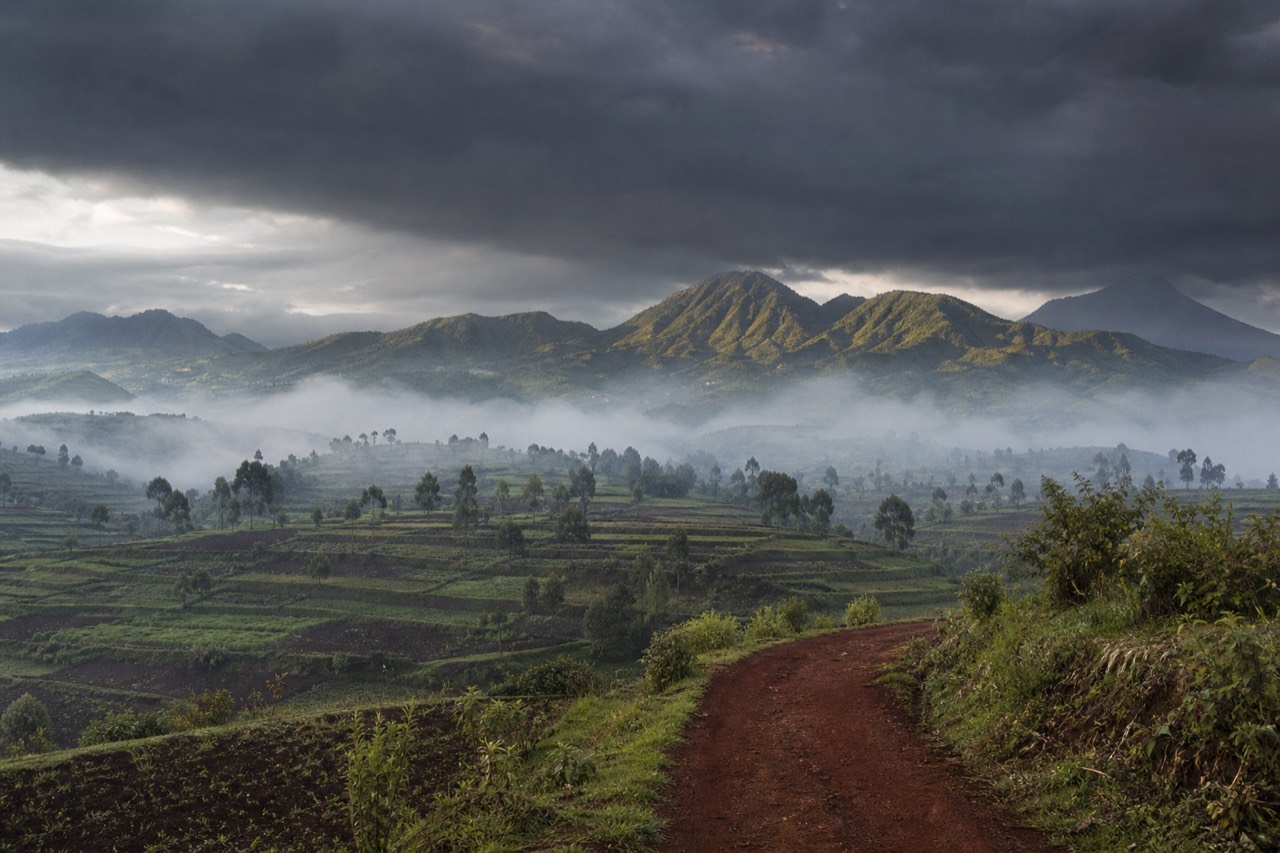
Short answer
Rwanda sits at US Level 3, Reconsider Travel, renewed 6 May 2026 for crime and unrest, with a Level 4 Do Not Travel band inside 10 km of the DRC border in Musanze, Rubavu and Rusizi districts. Volcanoes National Park is in Musanze. The UK restricts only parts of Rusizi, Canada and Australia advise normal precautions countrywide, and treks have kept running daily.
Two documents describe the same country and they do not sound alike. One is a US State Department advisory that puts Rwanda at Level 3 and paints a Do Not Travel band along part of its western edge. The other is a crime index that ranks Kigali among the calmer capitals a traveller can walk around at night. Both are current. Both are accurate. The gap between them is geography, and the whole question of whether to fly turns on reading that geography precisely rather than reading the headline.
Is Rwanda safe right now? The short, precise answer
Rwanda's national advisory level from the United States is Level 3, Reconsider Travel, renewed 6 May 2026 for crime and unrest. A stricter Level 4, Do Not Travel, applies only within 10 kilometres of the Democratic Republic of the Congo border in Musanze, Rubavu and Rusizi districts. The rest of the country, including Kigali, carries no such restriction.
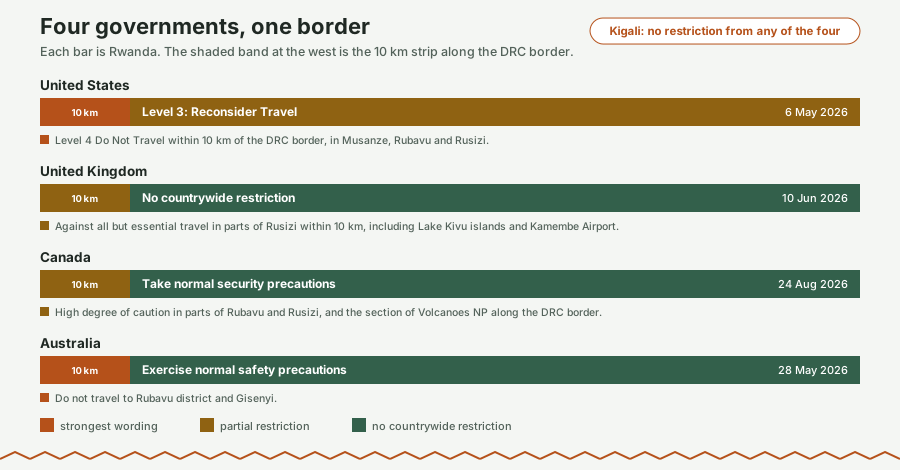
Four governments publish advice on Rwanda and they do not agree with each other. That disagreement is useful information, not noise. The United States takes the most cautious countrywide position. The United Kingdom takes the narrowest, restricting one district. Canada and Australia both say normal precautions apply across Rwanda generally, then name specific border pockets to avoid. When four independent risk assessments converge on the same 10-kilometre strip and diverge on everything else, the strip is the story.
| Government | Countrywide level | Restricted area named | Last updated |
|---|---|---|---|
| United States | Level 3, Reconsider Travel | Do Not Travel within 10 km of the DRC border in Musanze, Rubavu and Rusizi | 6 May 2026 |
| United Kingdom | No countrywide restriction | Against all but essential travel to parts of Rusizi within 10 km of the DRC border, including Rwandan islands in Lake Kivu and Kamembe Airport | 10 June 2026 |
| Canada | Take normal security precautions | High degree of caution in parts of Rubavu and Rusizi, and the section of Volcanoes National Park along the DRC border | 24 August 2026 |
| Australia | Exercise normal safety precautions | Do not travel to Rubavu district and Gisenyi | 28 May 2026 |
What exactly does the US travel advisory say?
The advisory places Rwanda at Level 3, Reconsider Travel, citing crime and unrest. Its Do Not Travel language is specific: "Do not travel to: Musanze District within 10 kilometers of Rwanda's border with the Democratic Republic of the Congo due to unrest." Similar Level 4 restrictions apply to parts of Rubavu and Rusizi districts.
Read that sentence twice, because the qualifier does most of the work. The Level 4 zone is not Musanze District. It is the part of Musanze District that sits within 10 kilometres of the DRC border. Everything in that district beyond the 10-kilometre line falls back to the countrywide Level 3. A traveller who reads only the district name will cancel a trip that a traveller who reads the full clause will take.
The Level 3 rating itself is a national judgement rather than a description of any one place. It bundles crime, the risk of unrest and the general difficulty of consular assistance into a single number. Level 3 is not a ban, it does not restrict US citizens from entering Rwanda, and it does not trigger any evacuation order. What it does trigger, in practice, is a set of insurance clauses and a set of employer travel policies, and those are the parts most likely to affect a real booking. Check the current wording yourself before you commit money: the US State Department advisory page for Rwanda is revised without much announcement, and the version you read in a forum post six months ago is probably not the version in force.
Volcanoes National Park is in Musanze District. Does that put the trek inside the Level 4 zone?
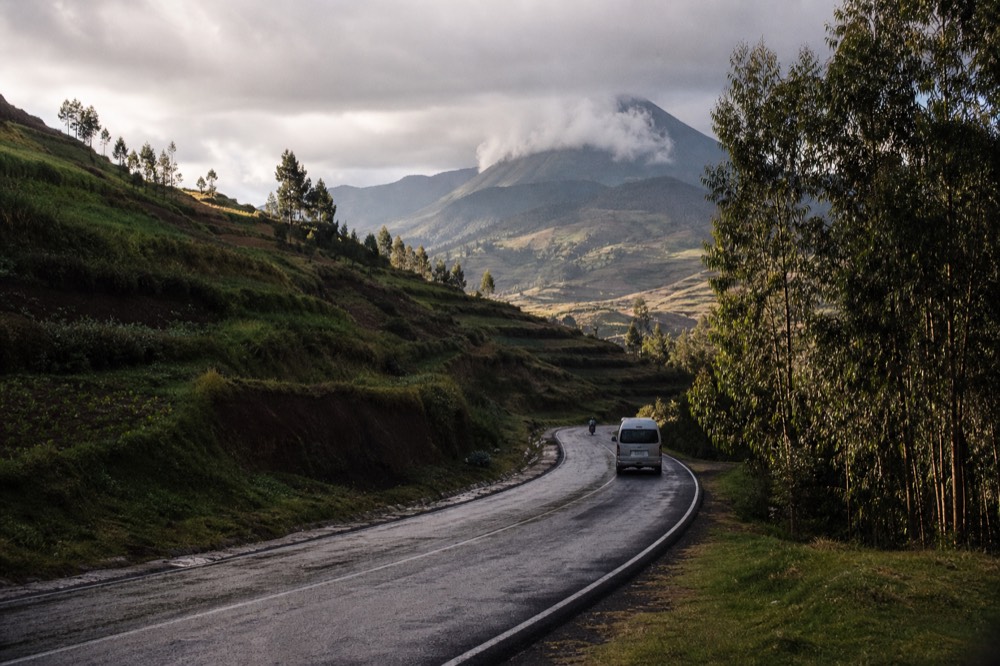
Volcanoes National Park does sit in Musanze District, and part of the park's northwestern boundary is the DRC border itself. Canada names that stretch directly, advising a high degree of caution in "the section of Volcanoes National Park along the DRC border." The district is not uniformly restricted, and the trekking operation has continued running daily.
This is the point where most safety writing about Rwanda goes soft, and it should not. Saying the park is safe because the advisory names a district is dishonest. Saying the trek is off because the advisory names Musanze is equally dishonest. The truthful version is more specific and slightly more uncomfortable: the park is large, it climbs the Virunga chain, and its far side touches Congo. Some of the park is within 10 kilometres of that border. Some of it is not.
What that means for a booking is a question your operator can answer and a webpage cannot. Trek assignments are handed out at the Kinigi park headquarters at the 07:00 briefing, on the morning, by rangers who know where the families slept the night before and where the security posture stands that day. You are not choosing a route from a map at home. If the border proximity matters to you, and for some travellers it legitimately does, ask the operator directly which families they normally track and raise the question again at the briefing. Nobody at Kinigi will be surprised by it.
| District | What the advisories say | Relevance to a trek day |
|---|---|---|
| Kigali (city) | No restriction from any of the four governments | Where you land, sleep, and start the drive |
| Musanze | Level 4 from the US within 10 km of the DRC border; Canada flags the park's border section | Volcanoes National Park and the Kinigi briefing point sit here |
| Rubavu | Level 4 from the US within 10 km of the border; Australia says do not travel; Canada says high caution | Lake Kivu and Gisenyi; skipped by every standard day trek |
| Rusizi | Level 4 from the US within 10 km; the only district the UK restricts | Far southwest, roughly the length of the country from the park |
| Everywhere else | Countrywide level only | Kigali genocide memorial, Nyungwe, Akagera, the road north |
Note what the table shows about distance. Rusizi, the district the UK singles out, is in the far southwest corner near Lake Kivu's southern end. A Kigali-based gorilla trek never approaches it. Rubavu, the one Australia names outright, sits on the lake north of that and is a genuine tourist destination in its own right, so a traveller adding a Lake Kivu beach night to a trek itinerary is making a different decision from one who flies in, treks, and flies out.
Is it safe for Americans to travel to Rwanda right now?
Yes, in the sense that matters legally and logistically: can US citizens visit Rwanda? Yes. Entry is unrestricted, visas are issued on arrival to nationals of every country at $50 single entry or $70 multiple entry, and no US measure prevents travel. The Level 3 rating asks you to weigh the risk yourself rather than removing the option.
The verbatim question people type is "is it safe for americans to travel to rwanda right now?" and the honest answer has three parts. The first is legal: nothing stops you. The second is practical: American travellers are on gorilla treks in Volcanoes National Park most days of the week, and the recent reviews on the flagship day trip are dated within the last few months, which you can see for yourself on the booking page alongside its 5.0 rating from 81 reviews. The third is the part that actually costs money if you get it wrong, and it is insurance.
Many travel policies contain a clause that voids or limits cover for destinations under a Level 3 or higher advisory, or under a "against all but essential travel" designation from the FCDO. Some policies exclude only the specific restricted area. Some exclude the whole country. Read the policy wording before you buy, not after, and if the answer is unclear, ask the insurer in writing for a decision specific to Rwanda at its current level. Medical evacuation from a mountain at 3,000 metres is the scenario worth being covered for, and it is not cheap to arrange privately.
US citizens can also register their trip with the State Department's traveller enrolment programme, which does two mundane but useful things: it puts your itinerary in front of the embassy in Kigali, and it means advisory changes land in your inbox rather than being something you find out about from a stranger. It takes five minutes and costs nothing.
What do the UK, Canada and Australia say?
The UK advises against all but essential travel only to parts of Rusizi District within 10 km of the DRC border, including Rwandan islands in Lake Kivu and Kamembe Airport, with no countrywide restriction. Canada advises normal security precautions across Rwanda. Australia also advises normal safety precautions overall, while telling its citizens not to travel to Rubavu district and Gisenyi.
The FCDO position, updated 10 June 2026 and current through August, is the narrowest of the four. It restricts one district in the far southwest and explains why: proximity to potential fighting inside the DRC, not conditions inside Rwanda. Kamembe Airport is named because it sits close enough to the border to fall inside the band. The FCDO travel advice for Rwanda says nothing restrictive about Kigali, about Musanze, or about the trek.
Canada's advice, refreshed 24 August 2026, is the most useful of the four for a trekker, because it is the only one that names the park. It sets the countrywide level at "take normal security precautions", the lowest of Canada's four tiers, then asks for a high degree of caution in parts of Rubavu and Rusizi and in the section of Volcanoes National Park running along the DRC border, citing rebel groups across that border and unclear border markings. Unclear border markings is a phrase worth sitting with. The concern being described is not gorillas or bandits, it is walking across an international line in a forest without meaning to, which is exactly the reason armed rangers accompany every group. Read it in full on Canada's Rwanda travel advice page.
Australia's Smartraveller, updated 28 May 2026, lands in a similar place: normal safety precautions across Rwanda, with a do-not-travel call on Rubavu district and Gisenyi because of the volatile security situation linked to the DRC. Four governments, four different readings of the same border, and only one of them applies a countrywide caution. That spread is the most honest summary anyone can give you.
How safe is Kigali?
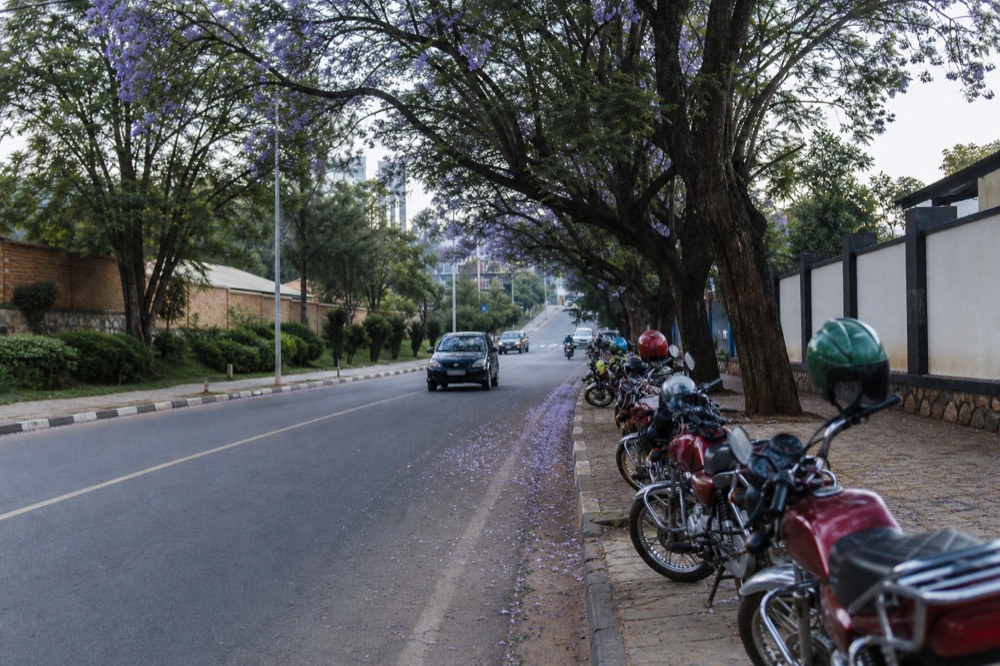
Kigali's contributor-reported Crime Index sits at 25.18 and its Safety Index at 74.82, figures that place it in the low-crime, high-safety band. Walking alone in daylight is rated very high for safety, and walking alone at night rates high. These are perception scores from residents and visitors, not police statistics, and they should be read as one signal among several.
Kigali's reputation is not a marketing invention. Travellers arriving from other capitals on the continent, and from plenty off it, remark on the same things: clean streets, working traffic lights, visible but unaggressive policing, and a night-time street life that people move through on foot without much thought. The numbers above, last refreshed in December 2025, match that.
Where honesty matters is in what those numbers are. Crowd-sourced indices measure how safe people feel, which correlates with but is not identical to how safe a place is. They are thin in some categories, they can be skewed by a small contributor pool, and they say nothing about petty theft trends over a given quarter. Treat 74.82 as a strong directional signal rather than a guarantee, and apply the same habits you would in any city: watch your bag in the markets, use registered taxis or the moto apps rather than unmarked cars after dark, and keep your phone in your pocket rather than in your hand while walking.
| Kigali indicator | Score or rating | What it measures |
|---|---|---|
| Crime Index | 25.18 | Perceived overall crime level; lower is better |
| Safety Index | 74.82 | The inverse of the crime index; higher is better |
| Walking alone during daylight | Very high safety | Perceived comfort moving around the city by day |
| Walking alone at night | High safety | Perceived comfort moving around the city after dark |
Are the gorilla treks actually running?
They are, daily, under the same published rules that have governed them for years: a 07:00 briefing at Kinigi park headquarters, a maximum of eight visitors per habituated family, ten families open to visitors for a hard ceiling of 80 permits a day, a seven-metre distance rule, one hour with the animals, and armed rangers with every group.
Reporting through 2026 describes ongoing, uninterrupted operation in Volcanoes National Park with high find rates, strict group limits and disease-prevention measures including masks. There has been no suspension of the trekking programme. The national picture backs that up: Rwanda recorded 1.49 million international visitor arrivals in 2025, up nine percent year on year, against tourism revenues of $685 million, up six percent. A country whose flagship tourism product had stopped would not be posting those figures. That tourism push is also the story behind Visit Rwanda on Premier League and NBA jerseys, which is worth reading as context for how seriously the country protects this industry.
The armed rangers deserve a sentence of their own, because first-time trekkers often read the rifles as a sign of danger. They are there for wildlife management, principally buffalo and forest elephant, for anti-poaching patrol, and for exactly the border-clarity issue Canada's advisory names. Groups do not wander. Every trek moves as a unit behind a guide who has been in that forest for years, and the practical questions people worry about beforehand tend to be answered inside the first ten minutes of the briefing. Whether anyone has actually been hurt on a gorilla trek is worth reading separately, because the honest answer is not the one the rifles suggest.
| Park rule | The number | Why it exists |
|---|---|---|
| Visitors per gorilla family | Maximum 8 | Limits stress on the group and disease exposure |
| Habituated families open to visitors | 10 | Caps the daily permit supply at 80 |
| Time with the gorillas | 1 hour | Limits cumulative human contact per family per day |
| Minimum distance | 7 metres, about 22 feet | Reduces the chance of pathogen transfer both ways |
| Minimum age | 15 years, no exceptions | Younger children are more likely to carry childhood illnesses |
| Photography | Permitted, no flash | Flash startles animals at close range |
| Illness | No trekking with a cold, flu or other contagious illness | Gorillas catch human respiratory infections and die of them |
What the advisory means for the money you are about to spend
A Level 3 rating changes three practical things: which insurance policies will cover you, whether your employer or university will approve the trip, and how much cancellation flexibility you should buy. It does not change entry rules, permit availability or the trekking schedule.
Cancellation terms vary sharply across the treks on offer and the advisory is a good reason to notice the difference. The day trips from Kigali are the flexible end: the $260 tracking trip and the $360 flagship both cancel free up to 24 hours before departure with the $1,500 permit bought separately, which means you can hold a date and check the live price while you watch how things develop, and still walk away. The all-inclusive packages that buy the $1,500 permit on your behalf are the opposite, because the permit itself is a non-refundable government product once issued. That is not an operator being difficult. Once the Rwanda Development Board has assigned you a slot on a specific date with a specific family, that slot is gone from the pool of 80.
The sequencing that follows is simple. Book the flexible day trip first if you want optionality. Buy the permit separately through the official RDB booking portal or let a permit-included package handle it if you want the whole thing solved in one payment and you are confident about the date. Either way, the permit money is the large, committed part of the spend, and the tour price is the small, flexible part. Our full breakdown of what a Rwanda trek actually costs sets out the arithmetic in detail, and the permit price, booking window and sell-out pattern get their own page because that is where most itineraries actually break.
| Trek | Starting price | Permit inside the price? | Cancellation |
|---|---|---|---|
| Gorilla Tracking Day Trip from Kigali | from $260 | No, the $1,500 permit is separate | Free up to 24 hours before |
| 1-Day Gorilla Trek from Kigali | from $360 | No, the $1,500 permit is separate | Free up to 24 hours before |
| Gorilla Trek plus Dian Fossey or Gorilla Guardians | from $300 | No, the $1,500 permit is separate | Free up to 24 hours before |
| Gorilla or Golden Monkey Trek | from $345 | Golden monkey permit included; gorilla permit separate at $1,500 | Free up to 24 hours before |
| 1-Day All-In Trek, Permit Included | from $3,350 | Yes, the $1,500 permit is inside the price | Non-refundable |
| 3-Day Gorilla Safari, Permit Included | from $3,746 | Yes, one permit per person inside the price | Non-refundable |
The risks that actually put trekkers in trouble
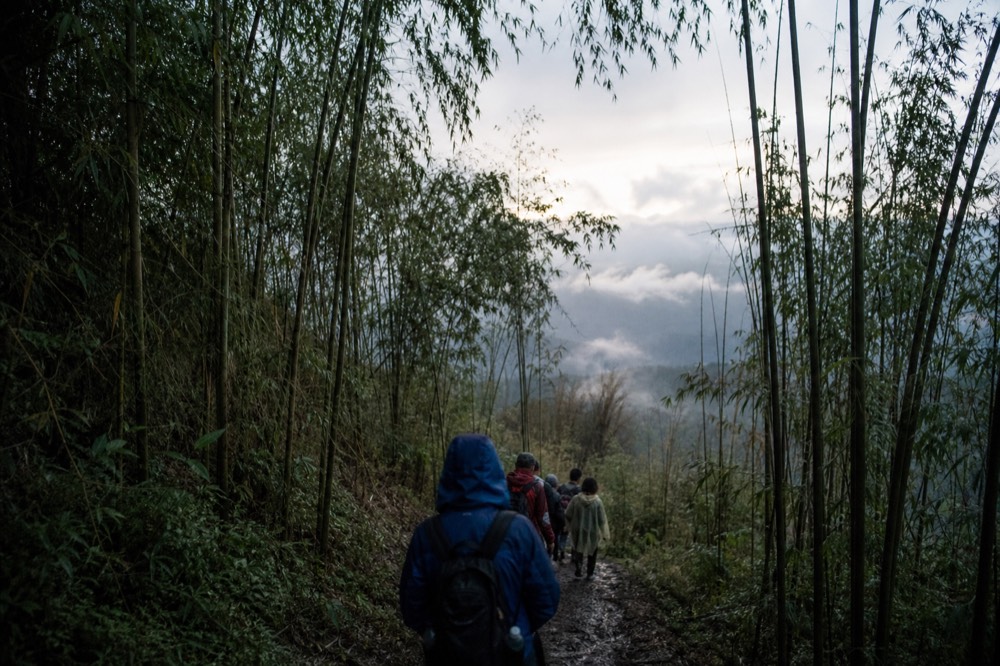
The hazards that reach travellers on a Rwanda trek are mundane ones: altitude between 2,500 and 4,000 metres, mud steep enough to take your feet out from under you, long road hours, and mosquito-borne malaria, for which health authorities recommend prophylaxis countrywide. Border unrest is the risk on the advisory. It is not the risk that ends most people's day.
Altitude is the underrated one. The Kinigi briefing sits around 2,500 metres and treks climb from there, so a traveller who flew in from sea level two nights ago is working harder than they expect on ground that does not look difficult. Give yourself a night in Kigali at minimum, and if you have any history of altitude trouble, plan more.
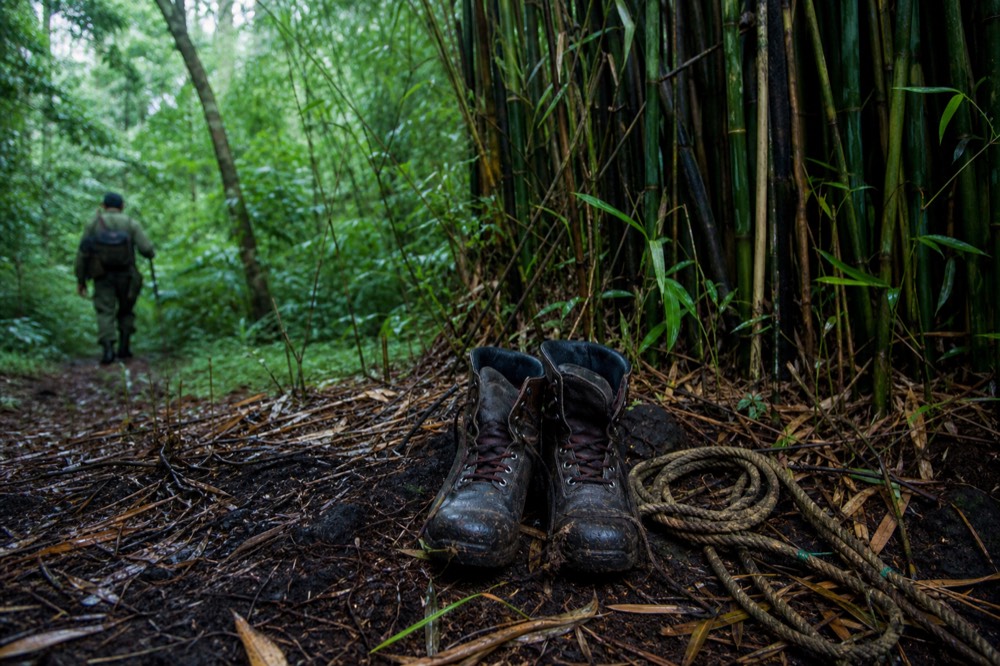
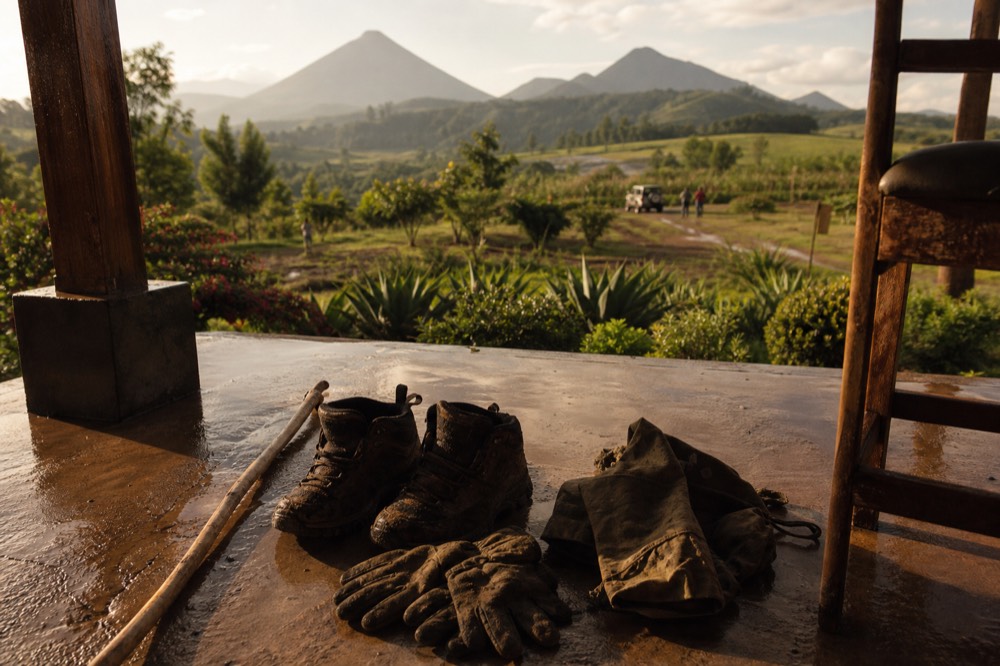
The mud is the famous one, and it earns the reputation. Volcanic soil under permanent forest canopy holds water, the slopes are steep, and the descent is harder than the climb because your legs are tired and the ground is slick. Hire a porter. They cost very little relative to the permit, they carry the bag, they haul you up the awkward bits by the wrist, and they are drawn from communities living beside the park, which is the point of the arrangement. What you put on your feet matters more than almost any other gear choice, and our packing list built around the mud is specific about it.
Yellow fever vaccination is only required if you are arriving from a country with active transmission, and health authorities do not generally recommend the vaccine for Rwanda itself. Malaria is different: the recommendation is country-wide prophylaxis, high altitude included, and the drive corridor between Kigali and Musanze runs through plenty of low ground.
| Risk | Who it actually hits | What reduces it |
|---|---|---|
| Altitude, 2,500 to 4,000 m | Anyone arriving from sea level without an acclimatisation night | One or two nights in Kigali first, slow pace, tell the guide early |
| Slips and ankle injuries | Almost everyone, mostly on the descent | Ankle-height boots with real tread, gaiters, a porter, a walking stick |
| Long road hours | Day-trip travellers doing Kigali to Kinigi and back in one day | A 4:30am pickup that returns in daylight, or a night in Musanze |
| Malaria | Every traveller, altitude does not exempt you | Prophylaxis as advised by a travel clinic, repellent, covered ankles at dusk |
| Border proximity | Only travellers who add Rubavu, Gisenyi or Rusizi to the itinerary | Read the four advisories, ask the operator, skip the lake leg if unsure |
| Being turned away at the briefing | Anyone under 15, or visibly ill on the morning | The age floor has no exceptions; do not travel sick, and do not hide it |
Who should think harder before booking this trip
Travellers whose insurance voids at Level 3 and who cannot buy alternative cover, employees whose organisations block advisory-rated destinations outright, anyone under 15 because the age floor is absolute, and travellers with untreated cardiac or respiratory conditions who would be climbing to 3,000 metres on wet ground.
There is also a category that has nothing to do with risk and everything to do with temperament. If reading a Level 3 notice will sit in your chest for the whole trip and colour every ranger's rifle and every roadblock, that discomfort is real and it will spoil an expensive day. Some travellers want the border question resolved before they can enjoy anything, and no webpage resolves it, because the honest answer stays "part of a large park runs along a border that other countries are fighting near, and the trekking operation has continued through it".
For travellers who would rather not manage the permit purchase and the tour booking as two separate decisions in a country they are reading advisories about, the all-in day from Kigali or Ruhengeri bundles the $1,500 permit, the Kinigi briefing, lunch and park fees into one 13-hour package from $3,350, and you can check which dates still have a permit attached before you commit, remembering that this one is non-refundable precisely because the permit is.
The opposite failure is worth naming too. Treating the advisory as background noise, skipping the insurance question, adding a spontaneous Lake Kivu leg into Rubavu because the lake looked nice on someone's feed, and never once reading what four governments actually wrote is not confidence. It is just not having done the reading. The reading takes fifteen minutes. If the trek itself is what you are weighing rather than the country, our honest look at how hard the climb really is is the next thing to read, and you can compare every bookable trek side by side once the safety question is settled in your own head.
Common questions
Is Rwanda safe?
By most measures used to answer that question, yes, with one precise exception. The United States rates Rwanda Level 3, Reconsider Travel, as of 6 May 2026, and applies a Level 4 Do Not Travel call only within 10 kilometres of the DRC border in Musanze, Rubavu and Rusizi. Kigali's crime index reads 25.18 against a safety index of 74.82, and Canada and Australia both advise normal precautions countrywide.
Is Rwanda safe to visit right now?
Yes, in the sense that entry is unrestricted, tourism is operating and gorilla treks run daily under unchanged rules. The current advisories, all refreshed between May and August 2026, restrict a narrow strip along the DRC border rather than the country. Rwanda recorded 1.49 million international arrivals in 2025 on tourism revenues of $685 million, both up year on year.
Is it safe for americans to travel to Rwanda right now?
Nothing prevents US citizens from travelling to Rwanda, and Americans trek in Volcanoes National Park most days of the week. The Level 3 rating asks you to weigh the risk rather than removing the option. The item most likely to affect you in practice is insurance: some policies limit or void cover for Level 3 destinations, so read the wording before you buy.
Can US citizens visit Rwanda?
Yes. Rwanda issues visas on arrival to nationals of every country, at $50 for single entry or $70 for multiple entry, with no prior application required at Kigali airport or land borders. The East Africa Tourist Visa costs $100 and covers Rwanda, Uganda and Kenya for 90 days. A yellow fever certificate is required only if you are arriving from a country with active transmission. Travelers choosing between the two trekking countries can weigh the border question in the Uganda versus Rwanda trek comparison.
Is gorilla trekking in Rwanda safe given the DRC border situation?
Trekking has continued daily throughout, under a 07:00 briefing at Kinigi, groups capped at eight, a seven-metre distance rule, one hour with the animals and armed rangers on every trek. Canada's advice names the section of Volcanoes National Park along the DRC border for a high degree of caution, so if that matters to you, ask your operator which families they normally track and raise it again at the briefing.
Which parts of Rwanda should I actually avoid?
The consistent answer across four governments is the western border strip: land within roughly 10 kilometres of the DRC in Musanze, Rubavu and Rusizi districts. Australia names Rubavu and Gisenyi outright, and the UK restricts parts of Rusizi including Lake Kivu's Rwandan islands and Kamembe Airport. Kigali, the Kigali to Musanze road and the standard trekking circuit carry no such restriction.